Choosing the best office chairs in 2026 is not just a furniture decision — it's a health and productivity investment. With 80.81% of office workers affected by musculoskeletal disorders (MSDs) according to a 2025 study published in Scientific Reports, and over €7 billion in annual losses for the French economy alone (INRS), the office chair has become a strategic lever for workplace performance.
This guide compares the best office chairs for 2026 across essential criteria — ergonomics, materials, durability, and budget — so you can equip your workstations with confidence. See how they pair with the right office furniture trends for 2026 for a complete workspace setup.
Why Your Choice of Office Chair Matters More Than Ever in 2026
The global office chair market reached $17.6 billion in 2024, with sustained annual growth of 5.6% through 2034 (Fortune Business Insights). This momentum reflects a widespread awareness: companies can no longer afford to ignore the impact of seating on team health and productivity.
In France, MSDs account for 87 to 90% of all recognized occupational diseases. The most common conditions among office workers are cervical pain (58.6% of cases), lower back pain (52.5%), and shoulder pain (37.4%). These figures are not inevitable — a well-chosen, properly adjusted ergonomic chair significantly reduces these risks.
The Real Cost of Choosing the Wrong Office Chair
Beyond the human impact, the financial consequences are measurable. A carpal tunnel syndrome case results in an average of 151 days of absence at a cost of €12,780 covered by CPAM. A shoulder condition means 220 days off and €17,000. Scaled to a team of 20 people, the financial risk of inadequate seating is considerable.
Conversely, companies that invest in ergonomic workstations report on average an 11 to 25% increase in productivity and a 32% increase in employee satisfaction (Apollo Technical / FMGI). The return on investment in better office chairs is fast and measurable.
How We Chose the Best Office Chairs for 2026
Before any comparison, it is important to define what distinguishes a truly great professional office chair from a generic seat. Here are the criteria we evaluated.
Ergonomic Adjustments: The Foundation of Any Best Office Chair
A properly fitted chair must allow each user to customize the seat to their body shape. The essential adjustments are:
- Seat height: should allow feet to rest flat on the floor with knees at 90°
- Seat depth: avoids thigh compression (ideally adjustable by 3 to 5 cm)
- Lumbar support: adjustable in height and depth to maintain the natural curvature of the back
- Backrest tilt: synchronized mechanism that follows body movements
- 4D armrests: adjustable in height, width, depth, and rotation to support the forearms
For a detailed understanding of how these adjustments affect your posture, consult our guide on workstation ergonomics.
Materials: Comfort, Durability, and Professional Image
The choice of materials influences daily comfort and the longevity of the chair. Three options dominate the professional market in 2026:
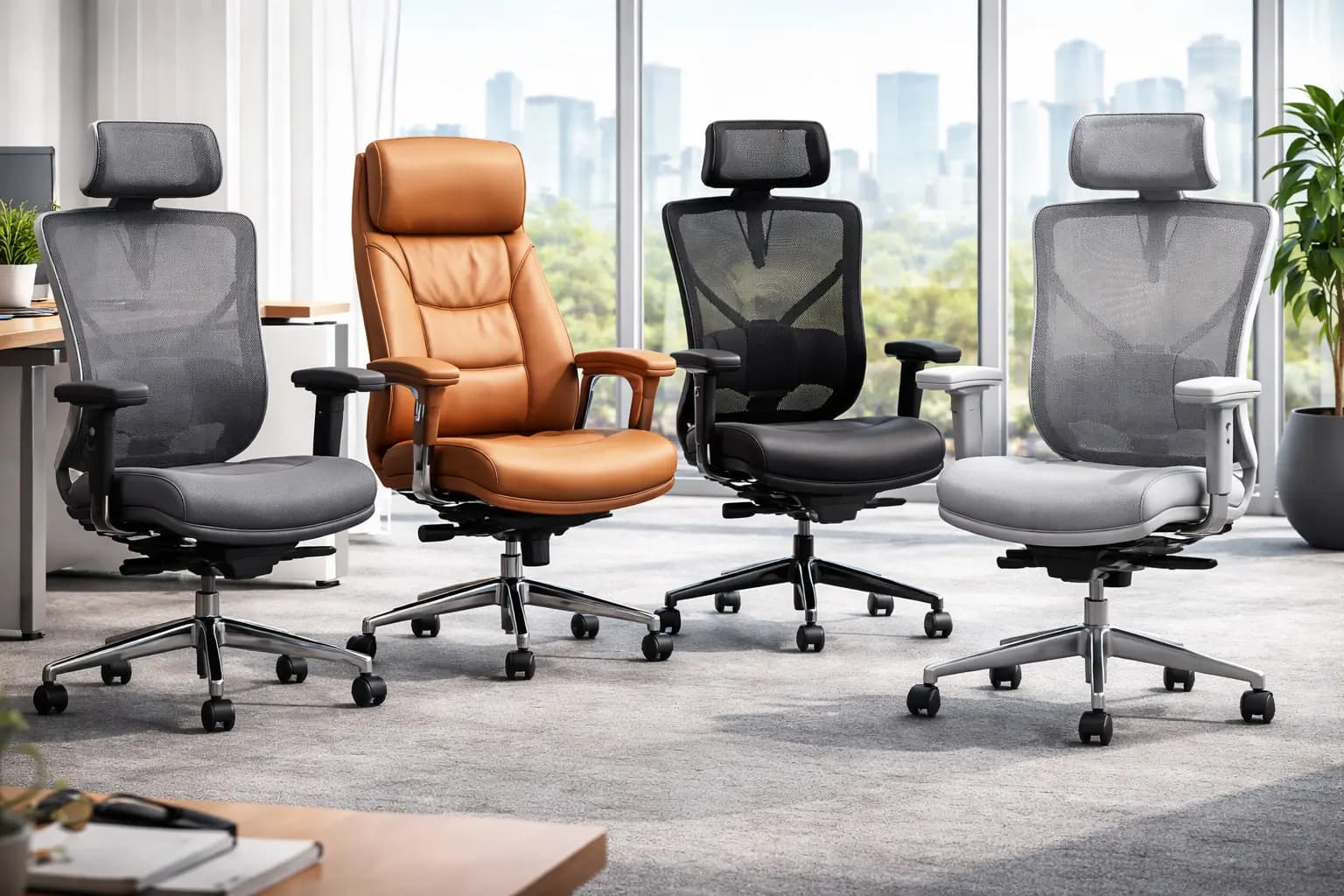
- Mesh fabric: excellent breathability, ideal for air-conditioned environments or long sessions. Recommended for intensive-use workstations (8h+/day)
- Polyester/microfiber fabric: comfort/price balance, wide choice of colors to match the company's image
- Leather and eco-leather: positioned in the executive and reception segment, projects a premium image while facilitating maintenance
Executive chairs often feature leather or eco-leather finishes. Our dedicated article on the leather office chair details the selection criteria for this segment.
Intensive vs. Occasional Use: A Fundamental Distinction
A chair designed for intensive use (certified for 8 hours/day, load up to 130 kg, test cycles per EN 1335 standard) is not the same as a visitor or meeting room chair. Confusing the two categories is the most common mistake in bulk purchasing.
For permanent workstations, prioritize chairs certified for intensive use, with a manufacturer's warranty of at least 3 to 5 years. For meeting spaces, criteria can be relaxed in favor of aesthetics and ease of storage.
Best Office Chairs 2026: Full Comparison Table
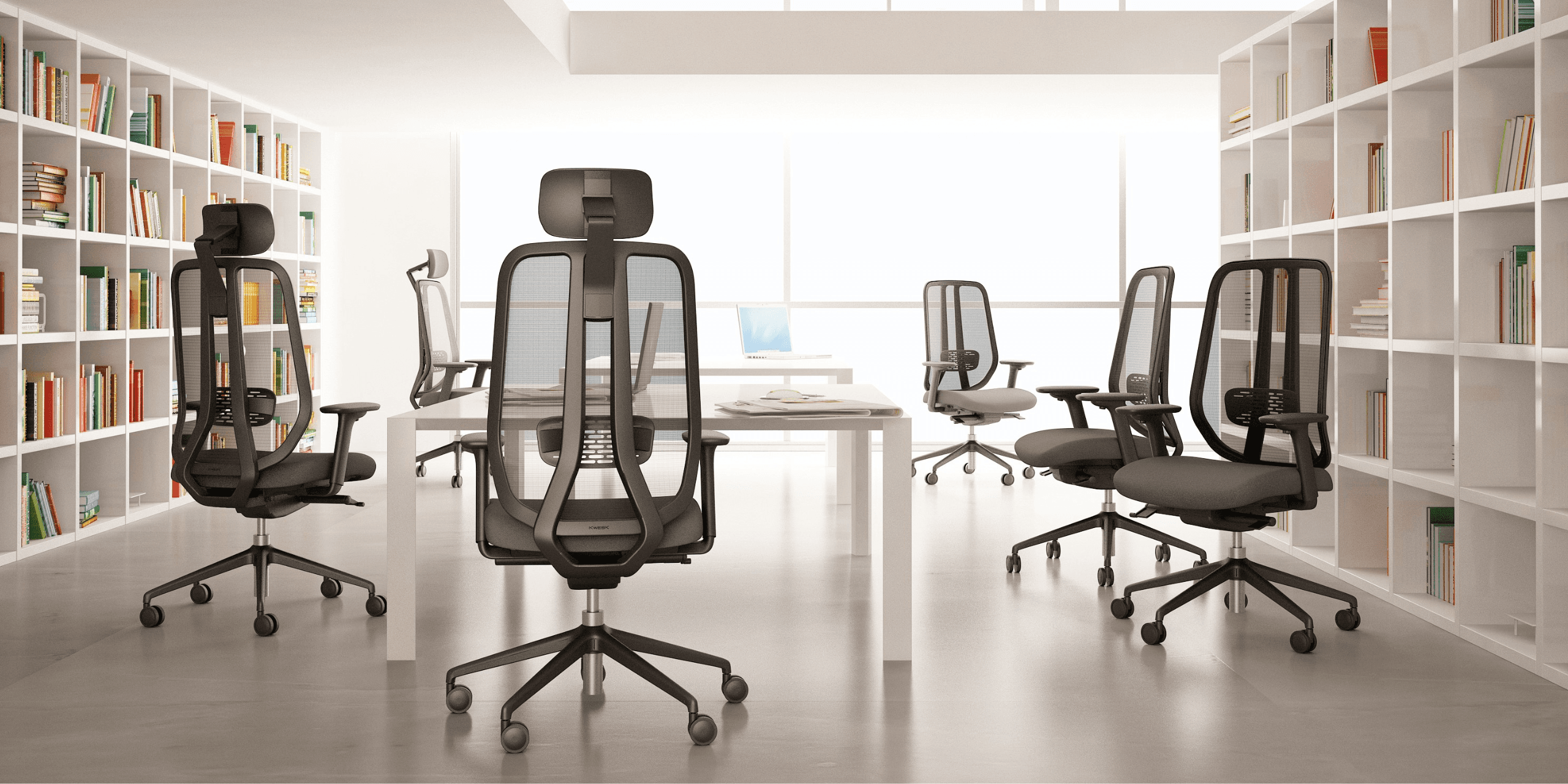
As a professional office chair manufacturer based in Casablanca with distribution in 12 countries, Kwesk offers several ranges designed to meet B2B market requirements. Here is how they compare side by side.
| Chair | Best For | Lumbar Support | Armrests | Backrest | Price Range | Warranty |
|---|---|---|---|---|---|---|
| Gamma | Call centers, open spaces | Adjustable height & depth | 4D | Mesh, synchronized tilt | €600 – €1,200 | 5 years |
| Gamma C | Screen-intensive work | Adjustable height & depth | 4D | Mesh + headrest | €600 – €1,200 | 5 years |
| Exclusive | Managers & executives | Adjustable | 4D | Upholstered, synchronized | €1,200 – €2,500 | 5 years |
| Exclusive G | Premium executive offices | Adjustable | 4D | Premium upholstery | €1,200 – €2,500 | 5 years |
| Challenger | Fleet renewals, general use | Fixed | 3D | Fabric, multi-color | €300 – €600 | 3 years |
| Corpo 100 | Formal workspaces | Fixed | 3D | Structured fabric | €300 – €600 | 3 years |
| BY 100 | Meeting rooms | — | Fixed | Lightweight, stackable | < €300 | 2 years |
| BY G | Conference rooms | — | Fixed | Lightweight, stackable | < €300 | 2 years |
| Caddy | Reception & waiting areas | — | — | Compact | < €300 | 2 years |
Best Office Chairs 2026 by Use Case
Best Office Chair for Intensive Workstations: Gamma Range
The Gamma chair is designed for demanding work environments — call centers, high-rotation open spaces, administrative production workstations. Its advanced synchronization mechanism and mesh backrest ensure optimal support over long working hours.
The Gamma C variant features an adjustable headrest, recommended for users who frequently work on screen and experience cervical tension.
Ideal for: call centers, coworking spaces, multi-user rotating workstations
Best Office Chair for Managers and Executives: Exclusive Range
The Exclusive chair combines ergonomic performance with executive finishing. Its wide seat, 4D armrests, and robust structure make it a relevant choice for management offices, where comfort and postural support must coexist.
The Exclusive G version enhances this offering with premium finishes and particular attention to upholstery details, suited to offices where aesthetics matter as much as performance.
For everything related to choosing an executive chair, our article on the executive chair will guide you step by step.
Best Office Chair for Value: Challenger and Corpo 100
The Challenger is the all-purpose best office chair in the range: accessible, ergonomic, available in several colors to suit contemporary office environments. It is often the preferred choice for large-scale fleet renewals, where value for money is the deciding factor.
The Corpo 100 meets similar needs with a more structured silhouette, suited to formal workspaces or companies wishing to project a sober and professional image.
Best Chairs for Meeting Rooms and Reception: BY and Caddy
For meeting rooms, occasional workstations, or reception areas:
- The BY 100 and BY G ranges offer lightweight and stackable seating, suited to modular configurations
- The Caddy chair completes the offering for transitional or reception spaces
For a detailed breakdown of what to look for in visitor and meeting room seating, see our dedicated visitor chair buying guide.
Office Chair Budget Guide 2026: What to Expect
Here is a realistic breakdown for the European market in 2026:
| Budget per Chair | What You Get | Recommended Use |
|---|---|---|
| < €300 | Basic ergonomics, limited adjustments | Visitor and meeting room chairs only |
| €300 – €600 | Good ergonomics, some advanced adjustments, decent durability | Standard workstations, fleet renewals |
| €600 – €1,200 | Certified intensive use, synchronized mechanisms, 5-year warranty | Daily 8h+ workstations, open spaces |
| €1,200 – €2,500 | Executive finish, premium materials, custom configuration | Management offices, boardrooms |
Good to know: in France, companies engaged in an MSD prevention program may benefit from co-funding from CARSAT or CPAM for the purchase of ergonomic furniture. This lever is underused, yet it can cover a significant portion of the investment.
To explore budget considerations further, our guide on the ergonomic office chair details the trade-offs to make based on the size of your fleet.
5 Mistakes to Avoid When Buying Office Chairs in 2026
Even experienced buyers make recurring mistakes. Here are five to anticipate to protect your investment.
1. Buying without testing A chair must be tried before bulk purchasing. Seat dimensions, mechanism firmness, and lumbar positioning vary significantly from one model to another, even within the same range.
2. Overlooking the morphological diversity of users A uniform fleet does not suit everyone. Plan for different sizes (standard, XL) and check the adjustment ranges to accommodate both shorter and taller users.
3. Choosing an executive chair for all workstations A wide, enveloping chair designed for managers is not suited to a dynamic workstation where the user stands up frequently. Match the model to the actual use.
4. Ignoring the warranty and after-sales service The durability of a professional chair is also measured by the availability of spare parts and the responsiveness of after-sales support. A minimum 5-year warranty is the standard for the intensive B2B segment.
5. Forgetting onboarding support The ergonomics of a chair are only effective if the user knows how to adjust it correctly. Include a short training session or an adjustment guide in your rollout. Our article on MSD prevention through ergonomic chairs provides educational materials to share with your teams.
Office Chair vs. Office Armchair: What's the Difference?
The confusion between "office chair" and "office armchair" is common in procurement requests. In practice, the two terms often refer to the same type of product, but with different connotations: the armchair (fauteuil) is more associated with comfort and status (executive use), while the chair is associated with functionality and versatility (operational use).
To avoid any confusion in your future purchases, our article on the difference between an office chair and an armchair clarifies the distinctions and recommended uses.
Frequently Asked Questions About the Best Office Chairs 2026
What is the most comfortable office chair in 2026?
The most comfortable office chair depends on your use case. For intensive daily use (8+ hours), mesh-backed chairs with synchronized tilt mechanisms like the Gamma range offer the best sustained comfort. For executive comfort, padded chairs like the Exclusive G provide a premium seating experience.
What is the best office chair for back support?
The best office chair for back support features adjustable lumbar support (both height and depth), a synchronized backrest tilt, and a seat depth adjustment. These features help maintain the natural curvature of your spine throughout the day. Our detailed guide on office chairs for back pain reviews the most effective models, and our article on preventing MSDs with ergonomic chairs covers prevention in depth.
How much should a company spend on office chairs?
For permanent workstations used 8 hours a day, budget between €600 and €1,200 per chair. This range gets you certified intensive-use chairs with synchronized mechanisms and a 5-year warranty. For meeting rooms and visitor seating, €100–€300 is sufficient. The total cost should factor in reduced absenteeism and increased productivity, which typically offset the investment within 12–18 months.
What is a standing desk and should I combine it with an office chair?
A standing desk (also called a sit-stand desk) allows you to alternate between sitting and standing throughout the day. Combining a height-adjustable desk with an ergonomic office chair is the ideal setup for 2026 — it lets employees vary their posture, reducing fatigue and the risk of MSDs while maintaining productivity.
Where can I buy office chairs in bulk for my company?
As a professional office chair manufacturer, Kwesk supplies businesses in 12 countries with bulk and wholesale pricing. You can request a quote for fleet orders, including customization options, volume discounts, and delivery coordination. We also offer wholesale office chairs for resellers and distributors. If you're equipping a full office, our 2-person desk setup guide can help you plan the complete workstation layout.
How to Choose the Best Office Chairs for Your Team in 2026
In 2026, the best office chairs are those that precisely match the use case, the morphology of users, and the company's ambitions in terms of workplace quality. There is no universal chair — but there is a method:
- Identify usage profiles: intensive workstations, executive, meeting rooms, visitors
- Define your non-negotiable criteria: adjustments, materials, warranty, certification
- Test before buying in volume: request samples or visit a showroom
- Factor in the total cost: purchase price + warranty + avoided costs (absenteeism, MSDs)
- Support the rollout: adjustment training, user feedback tracking
To receive personalized advice on equipping your workspaces, contact our team — we operate in France and in 12 countries for custom workspace fit-out projects.
Want to explore further? Also check out our ergonomic office chair comparison and our guide on how to choose the best office chair.