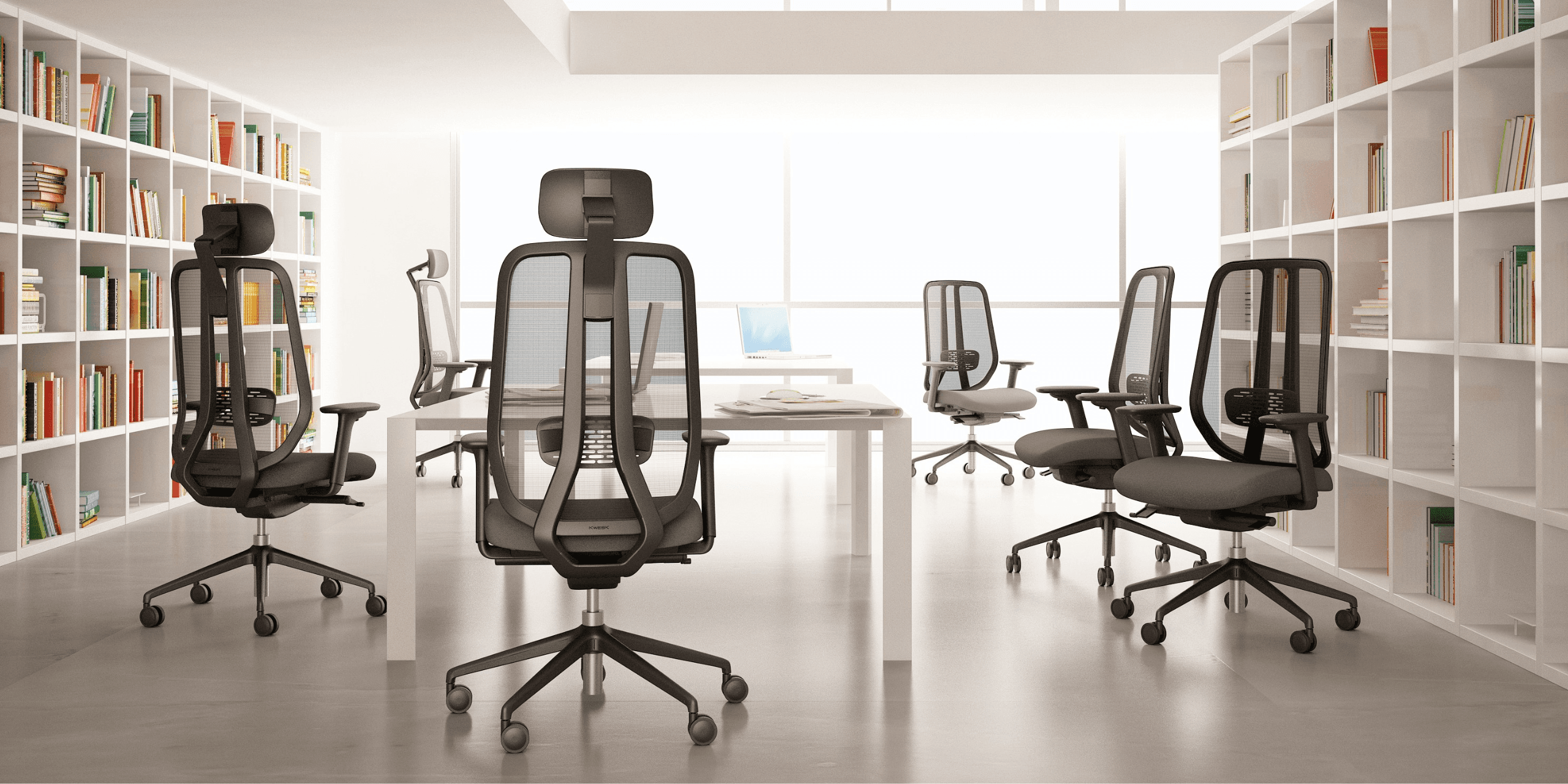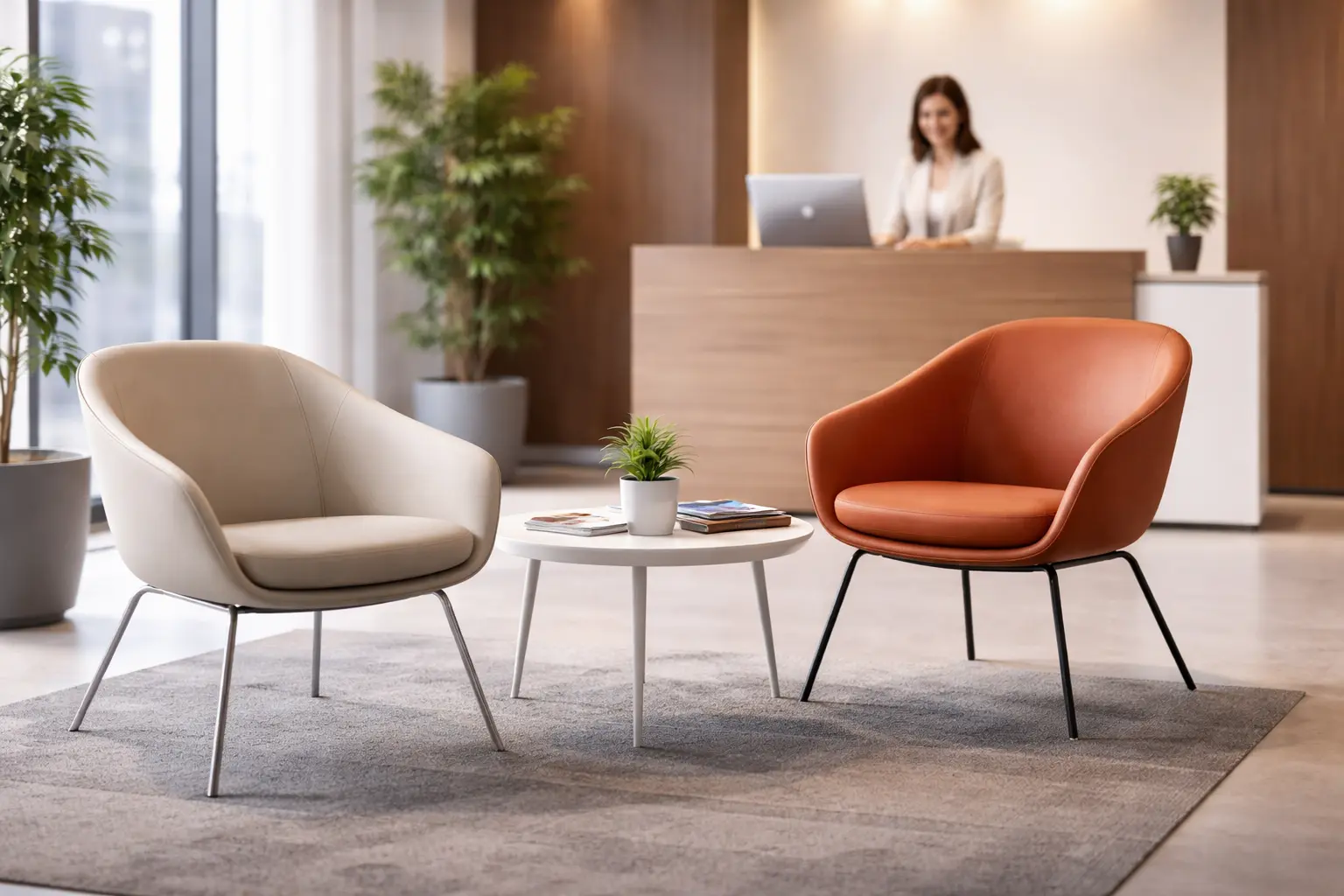
Your waiting area says a lot about you before you've even spoken a word. The office visitor chair is the first physical contact your client, partner, or job candidate has with your company. And that contact matters. According to a survey by Proxyclick conducted among 2,000 office workers in the UK and the United States, 40% of visitors say their perception of a company was negatively affected by their experience in the reception area. An uncomfortable, outdated, or ill-suited visitor seat, and it's your brand image that suffers.
This guide gives you the keys to choosing the visitor chair best suited to your professional context — from the executive office to the medical clinic, from the meeting room to the open-plan workspace.
Why the Visitor Chair Is a Strategic Issue
Reception: the first touchpoint for your brand
Every detail of your reception space communicates your company's values before any verbal interaction takes place. The furniture you choose — colours, materials, design — sends a strong signal about your positioning, attention to detail, and professionalism.
A poorly chosen visitor seat creates physical discomfort that your visitor will unconsciously associate with your brand. Conversely, a comfortable chair that is aesthetically consistent with your visual identity creates a positive and memorable first impression. According to studies cited by Artopex and EC Business Interiors, companies that have invested in well-designed, comfortable spaces record a measurable increase in client satisfaction and engagement.
The reception chair is therefore far more than functional furniture: it is a tool of non-verbal communication.
What research tells us about the waiting experience
Work published in the HERD: Health Environments Research & Design Journal (Huber & Bailey, 2024), based on over 1,100 participants, shows that the layout and comfort of seating directly influence the perception of the environment and the anxiety levels of visitors. Overly rigid or poorly positioned seats can heighten a sense of psychological discomfort, whereas a well-padded, properly placed chair helps to ease the wait.
For a professional reception area, the challenge therefore goes beyond mere physical comfort: it is about managing the emotional experience of your visitors from the moment they arrive. This is the approach that KWESK, an office chair manufacturer focused on intensive use, places at the heart of its product design.
Key Criteria for Choosing Your Visitor Seat
Comfort and lumbar support
Unlike an office chair used for several hours at a stretch, the visitor chair is designed for shorter periods of sitting — typically a few minutes to around an hour. This does not mean comfort is secondary.
A good visitor armchair should offer:
- Adequately padded seating — neither too soft (which causes the visitor to sink) nor too firm (which creates pressure points)
- A seat depth of 42 to 47 cm to support the thigh without compressing the back of the knee
- A contoured backrest with a slight lumbar curve to keep the spine in a natural position
- A seat height of 45 to 50 cm so that most users can place their feet flat on the floor
These specifications are in line with recommendations from the INRS (guidance note ED 70) and OSHA for seating in professional environments.
For visitors who sit regularly in your reception space, a chair designed to prevent back problems caused by poor posture remains a worthwhile investment, even for occasional use.
The base: a functional and aesthetic choice
The chair base determines both the stability of the seat and the visual identity of your reception space.
| Base type | Characteristics | Recommended use |
|---|---|---|
| 4-leg | Stable, often stackable, versatile | Meeting rooms, multi-purpose use |
| Sled (cantilever) | Contemporary design, lightweight, dynamic flex | Modern reception, business offices |
| Shell/runner | Ultra-light, easy to stack | Modular spaces, high visitor turnover |
The sled base is particularly popular in offices seeking a clean, contemporary look. It gives the visitor chair a visual lightness that integrates well into modern or minimalist spaces.
With or without armrests?
The presence or absence of armrests is often as much a practical choice as an aesthetic one.
With armrests (visitor armchair):
- More comfortable for waits lasting more than 15–20 minutes
- Makes sitting down and standing up easier, particularly for older visitors or those with reduced mobility
- Conveys an image of quality and care towards visitors
Without armrests (visitor chair):
- Saves space in narrow areas
- Easier to stack and move
- Better suited to row configurations or beam seating
If your professional waiting area welcomes visitors of all ages and profiles, opt for chairs with fixed or removable armrests. This is the ideal compromise between comfort and accessibility.
Materials: fabric, mesh, or leather?
The upholstery of your visitor chair directly impacts comfort, durability, and the image it projects.
Fabric: comfortable, available in a wide range of colours, suited to creative or warm atmospheres. Less resistant to stains — best avoided in high-traffic areas or where spills are likely.
Mesh: excellent airflow, easy to maintain, technical and modern aesthetic. Ideal for contemporary spaces, start-ups, or tech offices. Colour options are often limited (black, grey).
Faux leather (PU): premium appearance, very easy to clean (wiping is enough), resistant to repeated use. Perfect for medical practices, high-traffic receptions, or spaces seeking a polished finish without the price of genuine leather.
Genuine leather: prestige and longevity (10+ years with care), patina and high-end comfort. Recommended for boardrooms, law firms, and corporate headquarters. Pair it with a leather executive office chair for a cohesive overall look.
Matching Your Choice to Your Professional Context
Business office, law firm, or financial practice
In these environments, prestige and seriousness take priority. Consider:
- Noble materials: genuine leather or high-end faux leather
- Sober colour palettes: black, anthracite grey, burgundy, taupe
- Classic or contemporary design with clean lines
- Visitor armchairs with armrests to signal care and attention to clients
The executive chair and the visitor seat should form a coherent ensemble. Visual harmony between the two reinforces the credibility of your space.
Open-plan office, creative agency, or start-up
Here, furniture needs to convey dynamism and modernity. A fabric visitor chair in an accent colour, or a mesh armchair, will align perfectly with a relaxed yet professional atmosphere.
Think about stackability if you manage multi-purpose spaces: team meeting in the morning, candidate interviews in the afternoon. Lightweight, easy-to-move chairs are a real operational benefit.
For collaborative work environments, also consult our guide on workstation ergonomics for a comprehensive approach to well-being in the office.
High-traffic reception areas: medical clinics, public services, large corporations
High visitor turnover calls for strict criteria:
- Durability: choose materials that withstand repeated sitting cycles (faux leather, stain-resistant treated fabric)
- Ease of maintenance: cleaning and disinfection must be quick and straightforward
- Structural robustness: a reinforced metal or brushed steel base will handle intensive use far better than a plastic one
- Stackability or beam seating to maximise space and simplify cleaning
KWESK designs its products for intensive use with a 5-year warranty, making it a relevant reference for organisations receiving large numbers of visitors every day.
Accessibility Standards: What You Need to Know
If your company is a public-access establishment, accessibility regulations impose specific requirements for people with reduced mobility:
- Seat height: 45 to 50 cm minimum
- Circulation aisles: minimum width of 1.40 m between rows of seats
- Manoeuvring space: a circle of 1.50 m in diameter must be accessible for wheelchair users
- Chairs with armrests are recommended to make sitting and standing easier for elderly visitors or those with limited mobility
These criteria are not constraints: they ensure that every visitor, whatever their profile, can be welcomed in comfortable and dignified conditions. They also send a strong signal about your company's inclusive values.
The prevention of musculoskeletal disorders (MSDs) starts in the reception area. A visitor chair that meets ergonomic standards also protects your most vulnerable visitors.
Budget and Return on Investment
Price ranges to know
| Visitor chair type | Price range (excl. VAT) |
|---|---|
| Visitor chair without armrests (basic fabric) | €80 – €150 |
| Visitor armchair with armrests (fabric or faux leather) | €150 – €350 |
| Premium visitor armchair (leather, designer) | €350 – €800 |
| Beam seating (price per seat) | €200 – €600 |
For a professional waiting area of 15 to 20 m² accommodating 6 to 8 people, budget between €1,200 and €3,500 for a complete, cohesive setup.
Think in total cost, not purchase price
A visitor chair at €80 that needs replacing every 2–3 years ends up costing more over 10 years than a €200 chair built to last. And that calculation does not account for the invisible cost: a repeated poor client impression, whose commercial consequences are difficult to quantify but very real.
Investing in quality furniture for your reception area means investing in every first contact with your clients. For a complete overview of furniture investment, our guide to the best office chairs in 2026 will help you calibrate your budget to your requirements.
How to Build Your Final Selection
Here is a simple five-step method to structure your decision:
- Define your visitor profile: average age, waiting duration, frequency of visits, accessibility needs
- Assess your space: available surface area, configuration (linear, island, beam), maintenance constraints
- Set your main priority: premium image, wear resistance, modularity, or controlled budget
- Choose the right material: leather for prestige, faux leather for practicality, fabric for warmth, mesh for modernity
- Test before buying: where possible, sit in the chair for 10 to 15 minutes before committing to a large order
Conclusion
The office visitor chair is far more than a waiting-room accessory. It is an investment in your brand image, in the comfort of your clients, and in the longevity of your professional furniture. The criteria to examine — comfort, materials, base type, accessibility standards, and aesthetic coherence — are numerous, but mastering them will allow you to make an informed, durable choice.
At KWESK, we support companies in selecting and sourcing professional seating designed for intensive use. Whether you are looking for an ergonomic office chair for your teams or a visitor seat that reflects your company's image, our team is on hand to advise you.
Contact us for a personalised quote and explore our ranges designed for every professional context.