Equipping a professional workspace without blowing the budget is a daily challenge for many procurement managers and SME leaders. Used office furniture has emerged as a credible and strategic alternative for businesses looking to balance quality, savings, and environmental responsibility. According to the SME Observatory, nearly 60% of small and medium-sized enterprises report that optimizing their furniture budget has allowed them to reinvest in other priority areas. So how do you find great deals without compromising on comfort and durability? This guide gives you all the keys to a smart purchase.
Why Choose Used Office Furniture for Your Business
The used office furniture market is experiencing sustained growth. The global second-hand furniture market reached approximately $39.54 billion in 2025 (Source: Research Nester), and the professional sector is showing particularly strong momentum, driven by the rise of the circular economy.
Significant Financial Savings
The primary advantage of used office furniture is obviously the price. Businesses can achieve savings of 50% to 70% compared to buying new equivalent furniture. The Strasbourg metropolitan area, for example, reduced its furniture costs by 67% by opting for second-hand furniture (Source: Actual Immo, 2025).
In practical terms, this means a professional desk selling for €800 new can be found in excellent condition for €250 to €400 used. An ergonomic office chair designed by a reputable Office Chair Manufacturer, which sometimes costs over €1,000 new, can be purchased refurbished for a fraction of that amount.
A Concrete Ecological Commitment
Choosing used office furniture means actively contributing to reducing the carbon footprint associated with manufacturing and transporting new furniture. In France, the AGEC law (Anti-Waste for a Circular Economy) now requires public buyers to include a minimum of 20% recycled or second-life products in their tenders.
Furthermore, 79% of French consumers say they buy second-hand furniture for both financial and environmental reasons (Source: Ecomaison). This movement now extends broadly into the professional sector, where CSR (Corporate Social Responsibility) strategy has become a differentiating factor.
Tax Advantages Not to Be Overlooked
Used furniture can be depreciated over a period similar to new furniture, even though its initial cost is lower. This allows businesses to spread the tax burden over several years while immediately benefiting from a reduced price. Companies committed to eco-responsible practices may also qualify for specific grants or tax credits.
What Types of Used Equipment to Prioritize
Not all used office furniture is created equal. Certain categories of pre-owned equipment offer a better value-for-money ratio than others.
Office Chairs and Seating
This is probably the category where buying used makes the most sense. A professional-grade ergonomic office chair is designed to last between 8 and 12 years. Buying a model that is 3 or 4 years old and properly maintained gives you access to a high-performing seat with many years of service still ahead.
Key points to check on a used chair:
- The tilt mechanism: it should operate smoothly without jerking
- The seat foam: it should not be sagging or deformed
- The casters: they should roll without resistance on different surfaces
- The armrests: check that they adjust correctly in height and depth
- The gas lift: test the seat height adjustment to detect any sinking
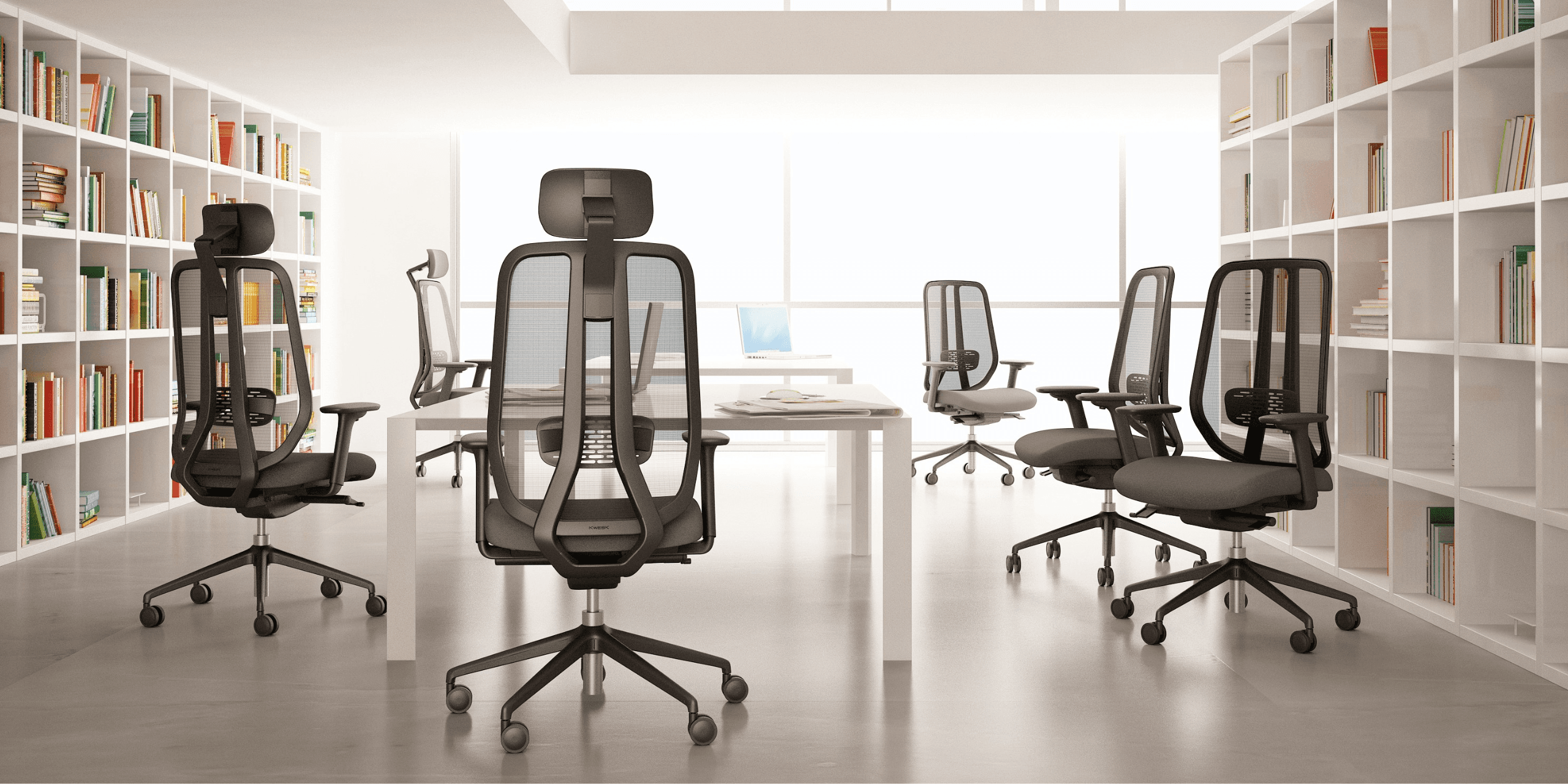
For businesses looking to invest in new seating, the KWESK Challenger ranges offer exceptional durability with a 5-year warranty, making them a cost-effective long-term investment.
Desks and Work Surfaces
Professional desks in melamine or solid wood generally age well. When buying used, look for models with:
- Stable metal legs (more durable than plastic)
- A surface free from delamination or swelling
- Built-in cable management for optimal organization
- Dimensions suited to your space: a two-person desk requires at least 160 cm in width
Storage Furniture
Cabinets, pedestals, and shelving units are excellent candidates for buying used. Their simple construction (metal or wood) makes them particularly durable. Check out our guide on office storage furniture to identify your needs before getting started.
Computer Furniture
Used computer desks can be an excellent deal, provided you verify that cable routing and monitor supports are in good condition.
How to Check the Quality of Used Office Furniture
Buying used office furniture requires a degree of diligence. Here is a 5-step method to avoid costly mistakes.
Step 1: Visual Inspection
Start with a careful examination of the entire piece of furniture. Look for:
- Deep scratches, dents, or chips on surfaces
- Signs of discoloration or burns
- Rust on metal components
- The overall condition of fabric or leather upholstery
Furniture with superficial signs of wear (minor scratches, slight patina) often represents excellent value for money. However, be wary of structural damage.
Step 2: The Stability Test
Press firmly on the desktop and gently shake the piece to assess its stability. Professional-quality furniture should show no wobble or suspicious creaking. Check that all screws and fasteners are properly tightened.
Step 3: Mechanism Check
For chairs, systematically test:
- 360° rotation
- Height adjustment
- Backrest tilt
- Position locking
For furniture with drawers or doors, open and close each moving element. The movement should be smooth, without forcing.
Step 4: Price Comparison
Always compare the asking price for used office furniture with the retail price of the same new product. A discount of 40% to 60% is reasonable for professional furniture in good condition. If the discount is less than 30%, negotiate or look elsewhere.
Step 5: Seller Verification
Prioritize dealers who specialize in used office furniture. These professionals typically offer products sourced from liquidations, surplus stock, or furniture fleet renewals. They often provide a 6-month to 1-year warranty and delivery service.
Mistakes to Avoid When Buying Used Office Furniture
Even on a tight budget, some savings can prove costly in the long run. Here are the most common pitfalls.
Sacrificing Ergonomics for Price
A €30 office chair from a classified ads site may seem like a bargain. But if the seat is deformed and lumbar support is non-existent, you will quickly invest in a replacement — not to mention the impact on your employees' health. Back pain caused by office chairs remains one of the leading causes of sick leave in the workplace.
Forgetting Additional Costs
The listed price for used equipment does not always include:
- Delivery: an 80 kg desk requires appropriate transportation
- Assembly: some furniture requires professional installation
- Refurbishment: cleaning, replacement of worn parts
- Customization: adding cable management, monitor risers, etc.
Factor these costs into your calculations to assess the true value of buying used.
Buying Without an Overall Strategy
Purchasing used office furniture piece by piece can create an inconsistent workspace. Before buying, define a clear layout plan. Identify your needs for professional office furniture and create a precise list of items to acquire.
Used vs New: How to Make Smart Decisions
The best strategy often involves combining used furniture with new pieces based on their importance for comfort and productivity.
What Works Well as Used
| Category | Why |
|---|---|
| Desks and work surfaces | Simple construction, age well |
| Cabinets and storage | Very durable, minimal mechanical wear |
| Meeting tables | Moderate use, easy to inspect |
| Drawer pedestals | Robust, simple mechanisms |
What Deserves a New Investment
| Category | Why |
|---|---|
| Intensive-use ergonomic chairs | Direct impact on health and productivity |
| Reception furniture | First client impression, brand image |
| Adjustable workstations | Recent technology, manufacturer warranty |
For chairs intended for intensive use (more than 8 hours per day), investing in quality new seating often remains the wisest choice. The KWESK Challenger and Exclusive ranges are specifically designed for intensive business use, with durable materials and a 5-year warranty.
Practical Tips for a Successful Purchase
To maximize the value of your used office furniture investment, follow these recommendations:
- Establish precise specifications: dimensions, materials, features, quantities. A structured purchase avoids unpleasant surprises
- Visit clearance showrooms: seeing and testing furniture in person remains the best way to evaluate quality
- Negotiate bulk purchases: specialized dealers often offer additional discounts for volume orders
- Ask for the furniture's history: a furniture fleet from a recent company will have less wear than 10-year-old stock
- Demand a warranty: even for used items, reputable professionals offer a minimum 6-month guarantee
- Think about visual consistency: choose a single supplier to achieve a cohesive look
- Check standards compliance: professional furniture must meet EN 527 (desks) and EN 1335 (office chairs) standards
Conclusion
Used office furniture is a strategic solution for businesses looking to optimize their fitout budget without sacrificing quality. With potential savings of up to 70% and a reduced environmental impact, buying used fits squarely within a responsible and intelligent purchasing approach.
The key to success lies in the method: define your needs, rigorously inspect each piece, and choose reliable sellers. For intensive-use workstations, particularly executive chairs and ergonomic seating, investing in quality new professional furniture remains the most cost-effective choice in the long run.
Looking to equip your offices with durable ergonomic chairs backed by a 5-year warranty? Discover the KWESK ranges designed for intensive professional use, or contact our team for a personalized quote tailored to your needs.