Equipping your premises with the right professional office furniture represents a strategic investment that directly impacts your employees' performance. According to a Steelcase study, companies that have optimized their work environment see an average 17% increase in productivity. For procurement managers, office managers, and executives, choosing office furniture for business is no longer limited to aesthetics: it's about creating a high-performing and sustainable work ecosystem.
This guide will help you select the workplace furniture that suits your needs, exploring essential criteria, current trends, and practical solutions to transform your workspaces.
Why Professional Office Furniture Is a Profitable Investment
Furnishing your workspaces with quality professional office furniture generates measurable benefits. Studies demonstrate a significant return on investment for companies that make this choice.
Direct Impact on Productivity
The numbers speak for themselves. A study by the Washington State Department of Labor and Industries revealed a 40% increase in productivity among 4,000 employees after the introduction of ergonomic furniture. Companies using smart furniture solutions see productivity gains of up to 20%.
Quality office furniture for business influences several performance factors:
- Reduced fatigue: an ergonomic chair decreases muscle tension
- Improved concentration: a well-designed workstation limits distractions
- Fewer sick days: 95% of workers confirm that ergonomics prevents daily physical discomfort
Proven Return on Investment
For every dollar invested in ergonomic interventions, companies recover between $3 and $15 in savings and productivity gains. The payback period is typically between 8 and 16 months, making it a particularly relevant investment.
Savings come from several sources:
- 32% reduction in healthcare costs related to occupational injuries (Occupational Medicine Journal)
- 25% decrease in workplace accidents through ergonomic furniture
- Reduced turnover through improved employee comfort
Essential Components of Professional Office Furniture
A complete setup requires several categories of workplace furniture that work together to create an optimal work environment.
The Office Chair: The Cornerstone of Ergonomics
Musculoskeletal disorders (MSDs) account for more than 87% of occupational diseases in France according to the French Health Insurance system. Choosing the right ergonomic office chair is therefore the top priority of any furnishing project.
Selection criteria for a professional chair include:
- Adjustable lumbar support: essential for maintaining the natural curve of the back
- Adjustable seat depth and height: adaptation to all body types
- Multi-directional armrests: prevention of neck and shoulder tension
- Reclining backrest: ability to vary positions throughout the day
- Breathable materials: thermal comfort for long working days
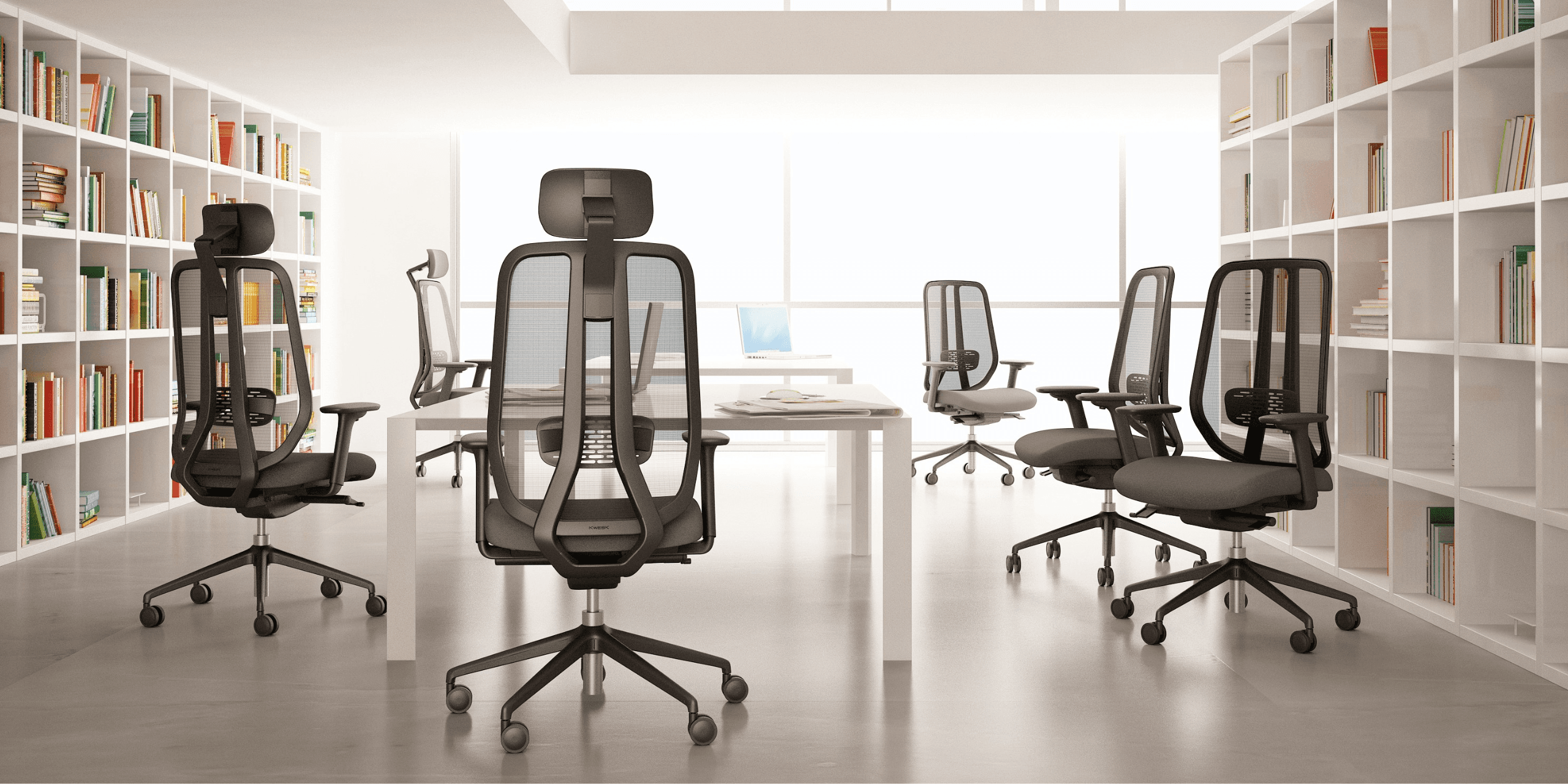
For intensive use positions such as call centers or open-plan offices, choose models designed to withstand more than 8 hours of daily use, such as the KWESK Challenger range which combines durability and advanced ergonomics.
Desks and Work Surfaces
The desk must provide enough space to work efficiently while fitting into the overall layout. Height-adjustable desks are seeing increasing adoption: users of sit-stand desks reduce their sitting time by 17% within three months.
Key points for desk selection:
- Minimum depth of 80 cm: optimal screen-to-eye distance
- Width suited to tasks: minimum 120 cm for a standard computer workstation
- Integrated cable management: organization and safety
- Robust surface: resistance to loads and daily wear
Storage and Organization
An organized workspace contributes to concentration. Professional storage furniture includes:
- Lockable cabinets and pedestals for confidentiality
- Modular shelving according to archiving needs
- Personal lockers for flex office spaces
- Vertical storage solutions to optimize floor space
2026 Professional Office Furniture Trends
The global office furniture market is growing by more than 5% per year, driven by three key imperatives: flexibility, smart ergonomics, and sustainability. Companies that anticipate these developments gain a competitive advantage.
Modularity and Flexibility
According to the CCI Normandie, 42% of SMEs plan to redesign their workspaces by 2026. This transformation responds to evolving work patterns: 78% of high-performing employees would consider leaving due to lack of flexibility.
Modular furniture allows you to:
- Quickly reconfigure spaces according to needs
- Alternate between collaborative work and individual tasks
- Optimize premises occupancy in a hybrid context
- Reduce future refurbishment costs
Biophilia and Well-being
Integrating natural elements into the work environment significantly improves well-being. A CNRS study shows that natural light increases concentration by 23% and reduces eye strain by 30%. Combined with plant elements, it generates a 20% productivity increase and a 25% stress reduction.
Biophilic design also stimulates creativity by 15%. Choosing natural materials and soothing colors contributes to this approach.
Sustainability and Responsibility
Furniture accounts for approximately 30% of a commercial building's carbon footprint over its lifecycle. Facing this reality, 72% of organizations are willing to invest more in eco-responsible solutions.
Sustainable criteria to consider:
- Recycled or recyclable materials: reduced environmental impact
- Local manufacturing: limited transportation and support for the regional economy
- Long-term warranty: the 5-year warranty offered by manufacturers like KWESK demonstrates product durability
- Repairability: extended furniture lifespan
Integrated Technology
Connected furniture is transforming the work experience. Current innovations include:
- Wireless chargers integrated into desks
- USB ports in chair armrests
- Posture sensors to raise user awareness
- Connected desks linked to corporate wellness dashboards
How to Choose the Right Professional Office Furniture for Your Business
Selecting professional office furniture should follow a structured methodology to ensure a relevant investment.
Needs Analysis
Before any purchase, accurately assess:
User profile
- Daily sitting time
- Types of tasks performed
- Body types and specific needs
- Existing conditions to consider
Space constraints
- Available surface per workstation
- Premises configuration (open plan, private offices, flex office)
- Accessibility compliance
- Circulation and passage areas
Budget and timeline
- Overall budget and per workstation
- Possibility of phased purchases
- Installation and delivery costs
- Planned maintenance budget
Priority Selection Criteria
For a lasting investment in your professional office furniture, prioritize:
1. Manufacturing quality
A professional office chair undergoes thousands of use cycles per year. The robustness of the frame, quality of mechanisms, and durability of coverings determine its longevity. Chairs designed for intensive use offer significantly longer lifespans.
2. Certified ergonomics
Look for European certifications and standards (EN 1335 for office chairs) that guarantee compliance with ergonomic standards. A certified ergonomic chair significantly reduces the risk of MSDs.
3. Manufacturer warranty
A minimum 5-year warranty demonstrates the manufacturer's confidence in their products. It protects your investment and ensures after-sales service when needed.
4. Spare parts availability
Being able to replace a gas lift, caster, or armrest considerably extends furniture lifespan and fits into a sustainable approach.
Solutions by Space Type
Open-plan offices and floors
Background noise reduces productivity by 66%. For these environments, combine:
- Chairs with acoustic options
- Mobile sound-absorbing partitions
- Dedicated concentration zones
- Furniture that absorbs noise disturbances
Executive offices
Company image is also conveyed through executive space design. Leather office chairs combine prestige and comfort for senior management positions.
Collaborative spaces
Favor modular furniture that allows quick transitions from meeting configurations to individual workspaces.
Remote work and home office
Equipping remote workers with professional ergonomic furniture maintains their productivity and prevents health issues. An office chair for back pain remains relevant whether at the office or at home.
Optimizing Your Workplace Furniture Installation
Furniture effectiveness also depends on proper installation and correct use.
Ergonomic Workstation Positioning
Quality furniture poorly installed loses much of its benefits. Ensure:
- Seat height: thighs parallel to the floor, feet flat
- Screen distance: 50 to 70 cm from the eyes
- Screen height: top edge at eye level
- Arm position: elbows at 90°, forearms supported
- Lumbar support: fitted into the small of the back
User Training
Plan employee awareness of best practices:
- Personalized chair adjustment
- Position changes throughout the day
- Recommended stretching exercises
- Reporting discomfort for adjustment
Preventive Maintenance
A maintenance program extends furniture lifespan:
- Annual mechanism inspection
- Regular upholstery cleaning
- Preventive replacement of wear parts
- Settings updates as needs evolve
Choosing the Right Partner for Your Professional Office Furniture
Supplier quality directly influences the success of your furnishing project.
Supplier Selection Criteria
Industry expertise Choose a specialized manufacturer rather than a generalist. Expertise in professional office furniture guarantees better understanding of your challenges.
Advisory capability A good supplier analyzes your needs before proposing solutions. They can conduct workstation audits and recommend suitable configurations.
Associated services Beyond the product, evaluate:
- Delivery and installation
- User training
- Responsive after-sales service
- Warranty management
Client references Request feedback from companies similar to yours in terms of size and industry.
Anticipating Future Needs
The global office furniture market is expected to reach $130 billion by 2036 (Research Nester), with annual growth of 7.2%. This dynamic reflects the constant evolution of work patterns.
When investing, anticipate:
- Your workforce evolution
- Changes in work patterns (hybrid, flex office)
- Growing regulatory requirements for ergonomics
- Expectations of new generations of employees
Conclusion: Transform Your Workspaces
Choosing professional office furniture represents much more than an equipment expense: it's an investment in your teams' performance and well-being. The data is clear: an optimized work environment generates higher productivity, reduces absenteeism, and strengthens company attractiveness.
To succeed in your furnishing project:
- Accurately assess your needs by involving end users
- Prioritize quality with guaranteed and durable products
- Think ergonomics by placing the chair at the center of your thinking
- Anticipate the evolution of your work patterns
Looking to equip your premises with quality professional office furniture? Discover KWESK ranges designed for intensive business use, or contact our experts for a personalized study of your needs.