Are you replacing your company's fleet of office chairs and wondering how to recycle an office chair without sending it to landfill? Good news: between certified collection channels, charities willing to take used furniture, and manufacturer take-back services, there are now several concrete solutions to give your professional furniture a second life. According to the French Environmental Agency (ADEME), office furniture accounts for nearly 1.7 million tonnes of waste every year in France, much of which could be reused or recovered.
This guide walks you step by step through the best choice based on the condition of your chairs, your budget and your CSR goals.
Why You Shouldn't Throw Your Office Chair in the Bin
An office chair is a complex product: polyurethane foam, steel mechanisms, a pressurised gas cylinder, technical plastic, fabric or leather, aluminium armrests. Sent to landfill, the whole thing generates unsorted waste even though 80 to 90% of its components can be recovered, according to figures published by Valdelia, the French eco-organisation for professional furniture.
Beyond the environmental aspect, throwing professional furniture into regular waste is simply illegal in France under the AGEC law of 2020. Companies producing more than 5 m³ of furniture waste per week are required to use a certified channel.
Regulatory Issues You Need to Know
Since 2013, Furniture Element Waste (DEA in French) has been subject to the EPR (Extended Producer Responsibility) framework. In practice:
- Manufacturers fund collection and treatment via an eco-contribution
- Companies must hand over their old chairs to a certified operator
- A waste tracking slip may be required for large volumes
Good to know: the AGEC law also requires public buyers to include 20% of reused or recycled furniture in their purchases. A concrete opportunity to add value to your chairs in good condition.
Assessing Your Chair's Condition Before Deciding
Before choosing between recycling, donation or take-back, diagnose the actual condition of the seat. This step determines the most suitable — and most cost-effective — solution.
Condition 1: Functional and Clean Chair
If the mechanism works, the seat is not sagging and the fabric is in good condition, your chair can be reused directly. This is the most environmentally friendly option: no transformation, no energy consumed. Prioritise donation or second-hand resale.
Condition 2: Chair with Minor Defects
A sagging cylinder, broken castors, a loose armrest: these defects can often be fixed in less than 30 minutes. Before parting with the chair, check our guides on how to change the gas cylinder or replace the office chair castors. A €20 repair can extend the lifespan by 3 to 5 years.
Condition 3: Damaged or Obsolete Chair
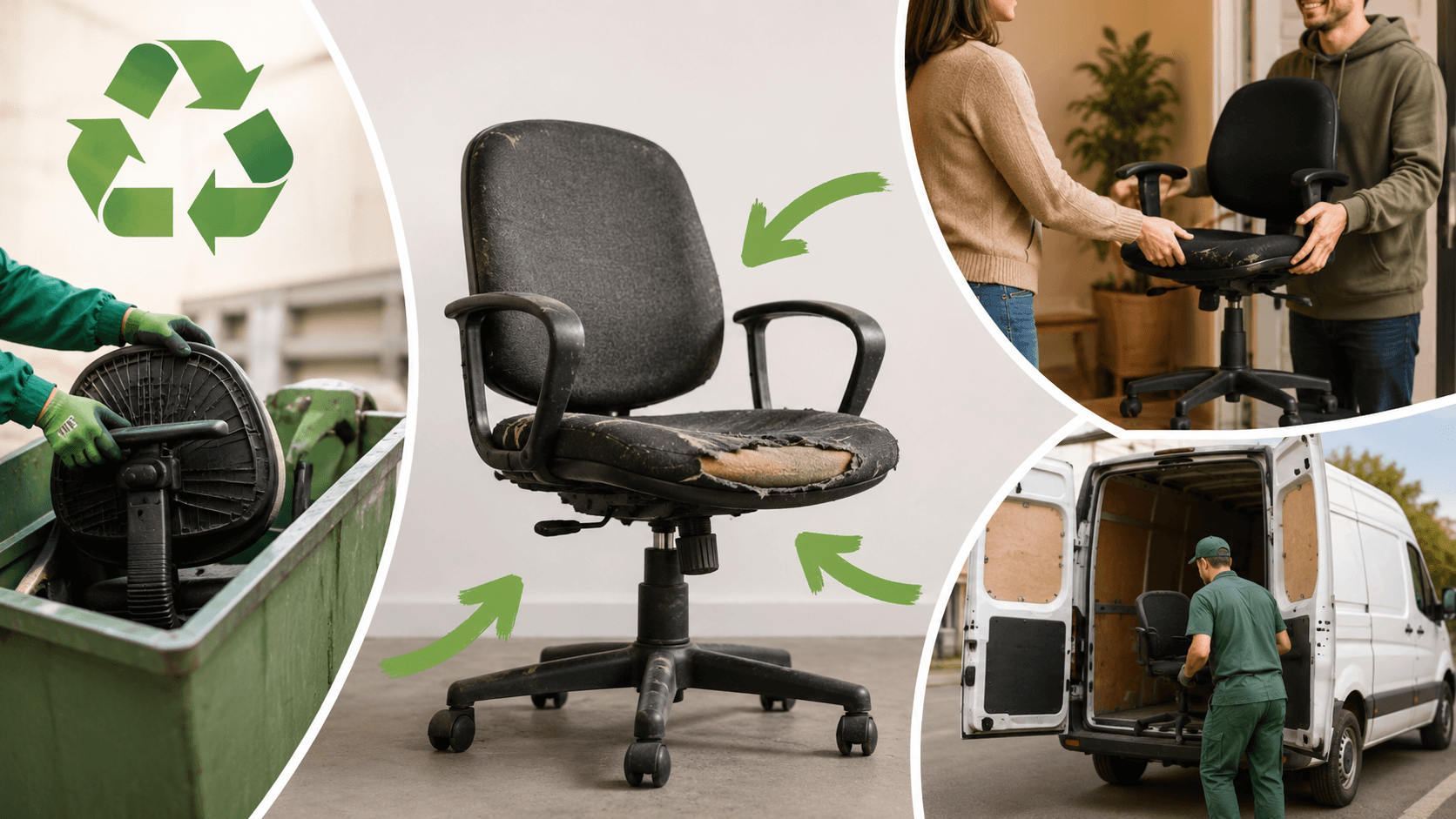
Crushed foam, cracked structure, faulty mechanism: this is where recycling makes full sense. The chair enters a dismantling channel where each material is sorted and recovered separately. To identify this stage, see signs that a chair needs to be replaced.
Solution 1: Recycle Your Office Chair Through a Certified Channel
Regulated recycling remains the safest route for companies wanting full traceability. The French collection network is now well structured and efficient.
Valdelia: The Eco-Organisation for Professional Furniture
Valdelia is the reference operator for used office furniture. Its network covers the entire country with more than 300 collection points and offers a free service from 20 items (chairs, armchairs, desks combined).
In practice, here is the procedure to follow:
- Online registration on the Valdelia portal with a furniture inventory
- Diagnosis: Valdelia directs items to reuse or recycling depending on condition
- Free pickup by a certified operator
- Treatment certificate issued for your CSR report
According to the eco-organisation's 2024 activity report, 52% of collected furniture is reused or repurposed, and the rest is recycled by material. A strong argument to highlight your approach with your clients or management.
Professional Recycling Centres
For smaller volumes or one-off needs, professional recycling centres accept office chairs in exchange for a weight-based fee (generally €0.15 to €0.30/kg). Check with your local council; some offer dedicated containers for office furniture.
Solution 2: Donation, the Most Solidarity-Driven Option
If your chair is still functional, donation is both the most eco-friendly and the most human solution. Many organisations actively look for office furniture to equip their premises or beneficiaries.
Who Can You Donate Your Office Furniture To?
Several networks accept donations of professional furniture:
- Emmaüs: free pickup from 5 chairs in good condition
- La Ressourcerie: national network with more than 200 facilities
- Le Relais: known for textiles, also accepts furniture in some regions
- Local charities: shelters, schools, integration centres, employment services
- Startups and incubators: often looking for zero-cost equipment
Tax benefit: a donation to a recognised public-interest charity gives entitlement to a tax reduction of 60% of the value of the goods (article 238 bis of the French Tax Code), within the limit of 0.5% of turnover. Excellent news for corporate furniture donations.
Specialist Digital Platforms
Several platforms have emerged to make it easier to connect donating companies with receiving organisations: Bluedigo, Adopte un Bureau, Co-Recyclage. They often handle logistics and provide the documentation required for your accounting.
Solution 3: Take-Back by the Manufacturer or Reseller
Office chair take-back by the manufacturer is an increasingly widespread option, particularly attractive when renewing a fleet.
How Does Take-Back Work?
When purchasing new chairs, some manufacturers — including KWESK for professional volumes — offer a take-back service in exchange for a commercial discount or free pickup. The advantage: a single point of contact for the delivery of new chairs and the removal of the old ones, with no disruption to office activity.
Before signing your quote, ask about:
- Take-back conditions: minimum volume, accepted condition, geographical area
- Proposed value: discount, credit or simple removal
- Destination of the collected furniture: reuse, recycling, traceability
- Environmental certificate provided at the end of the operation
This approach is part of a circular economy logic that more and more clients require in their tenders. For large-scale office chair replacement projects, it is often the smoothest option from an operational standpoint.
The Second-Hand Professional Furniture Market
If your chairs have a residual value, reselling them on the second-hand professional market can generate extra income. Several players buy lots of office furniture in good condition. To understand this market and its prices, check our guide on second-hand office furniture.
How to Choose the Right Solution for Your Situation?
| Situation | Recommended Solution | Average Timeline |
|---|---|---|
| 1 to 5 chairs in good condition | Local charity donation | 1-2 weeks |
| 10 to 50 mixed chairs | Valdelia or specialist platform | 2-4 weeks |
| 50+ chairs, full renewal | Manufacturer take-back | To be planned with purchase |
| Damaged chairs | Certified recycling channel | 2-3 weeks |
| Homogeneous recent lot | Professional second-hand resale | Variable |
Key Decision Criteria
To decide between options, ask yourself these three questions:
- What is the actual condition of the fleet? Do an honest inventory, photos to support it
- What is the schedule? Manufacturer take-back requires upstream coordination
- What are the CSR goals? Reuse beats recycling in terms of carbon impact
Preparing the Chairs for Pickup: Best Practices
Whatever solution you choose, a few preparatory steps make the operation easier and maximise the chances of reuse.
Pre-Pickup Checklist
- Clean each chair: a clean chair is 3 times more likely to be reused
- Remove stickers and internal IDs (inventory numbers)
- Group the chairs in an area accessible to carriers
- Photograph each lot for the traceability file
- Check leasing contracts: a chair on lease is not yours to give
Tip: if some chairs have minor repairable defects, a quick in-house workshop can turn waste into a valuable donation. The techniques to repair a chair that squeaks or sags are easy to apply.
Eco-Responsibility in Choosing Your New Chairs
Recycling your old chairs is good. Choosing chairs designed to last is even better. The best furniture recycling channel is still the one you don't need to use for 10 years.
What Makes a Durable Chair?
To reduce renewal frequency and overall environmental impact:
- Long warranty: minimum 5 years on the mechanism (KWESK ranges offer this duration for intensive use)
- Repairability: spare parts available, standard ISO cylinder, interchangeable castors
- Materials: prefer metal structures over technical plastics
- Standards: NF Office Excellence Certified, EN 1335 for professional use
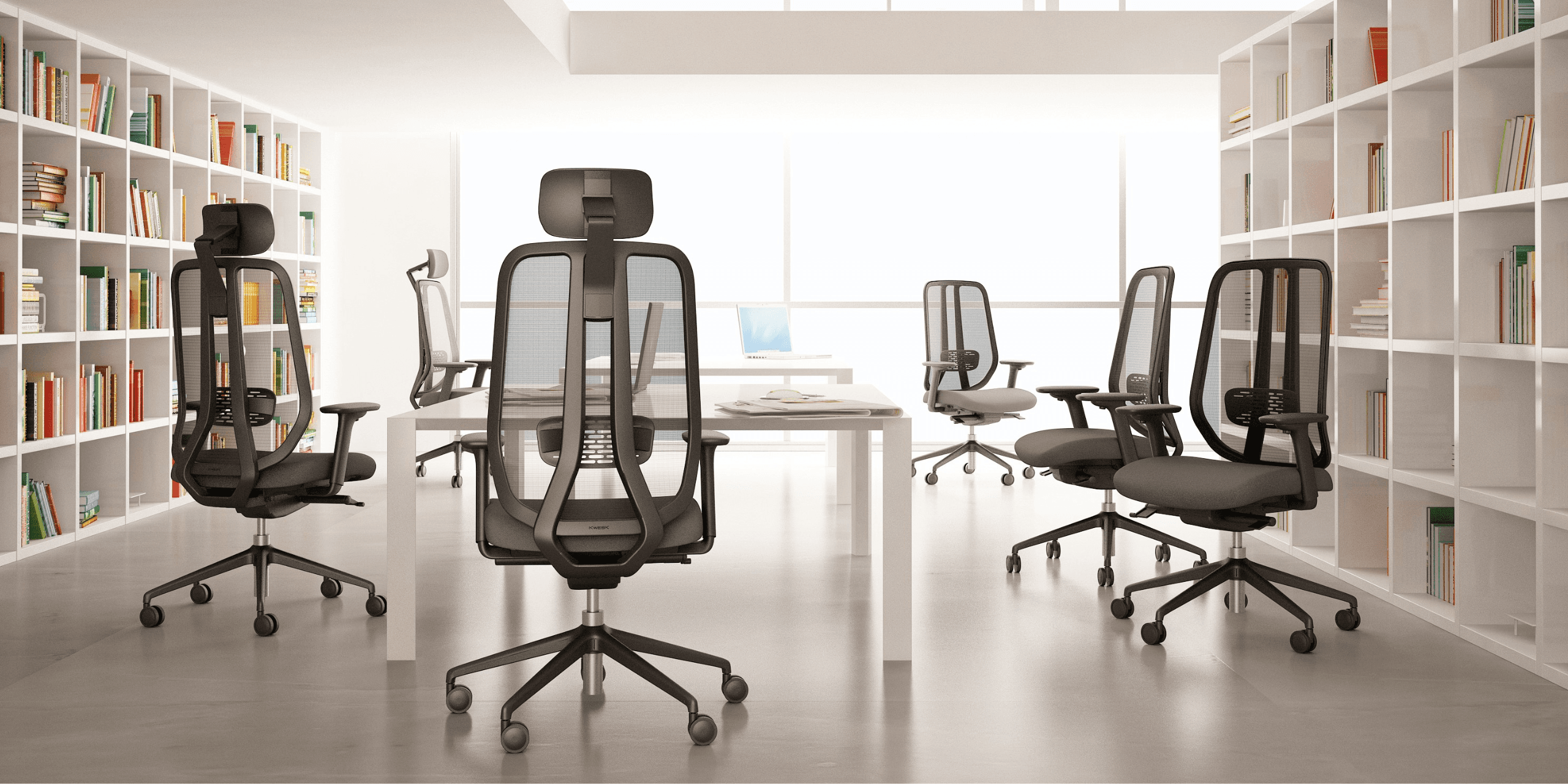
The Challenger and Exclusive ranges, for example, are designed for intensive use over 8 to 10 years, with standard components that are easily replaceable — a real plus for limiting waste production in the long term.
Conclusion: Turning a Constraint into a CSR Opportunity
What to do with an old office chair? The answer depends on its condition, your volume and your goals, but one thing is certain: landfill is no longer an option, legally or environmentally. Between certified channels like Valdelia, tax-deductible donations to charities, and take-back by the manufacturer when renewing, you now have several concrete and traceable solutions to choose from.
To take the next step:
- Take stock of your fleet with an honest condition diagnosis
- Calculate the volume to identify the right channel
- Plan ahead: a take-back operation should be scheduled 4 to 6 weeks in advance
- Document the process to highlight your CSR commitment
Are you planning to renew your fleet of office chairs and want to combine a take-back solution with the purchase of durable seating? Contact the KWESK team to discuss a tailor-made project together, from the initial diagnosis to the removal of your old chairs.