Working from home has become a reality for millions of people: according to a Gartner study, 82% of companies now plan for a lasting hybrid model. Yet nearly 25% of remote workers say they struggle to find an adequate workspace. Setting up an effective home office corner — even in a compact apartment or small house — has become a key challenge for maintaining productivity and comfort. The good news: you don't need a dedicated room to create a workspace that truly works.
Why a Dedicated Office Corner Changes Everything
Working from a sofa or kitchen table may seem convenient in the short term, but this habit has a real cost. According to the UFIPA 2025 barometer, 75% of workers have encountered at least one difficulty related to an ill-adapted work environment — eye strain, back pain, lack of focus.
A clearly defined home office corner allows you to:
- Mentally separate professional and personal life
- Improve concentration by reducing distractions
- Protect your health with a proper posture
- Increase your productivity: an optimized work environment can boost productivity by 10 to 25% (Source: Steelcase, 2025)
Even in a studio or one-bedroom apartment, a well-thought-out home office setup is entirely achievable. The key lies in choosing the right location and the right furniture for your space.
Finding the Right Location for Your Office Corner
Before buying anything, start by identifying the best spot in your home for your workspace.
Often Overlooked Areas
Several spaces are regularly neglected yet perfectly suited for a small home office corner:
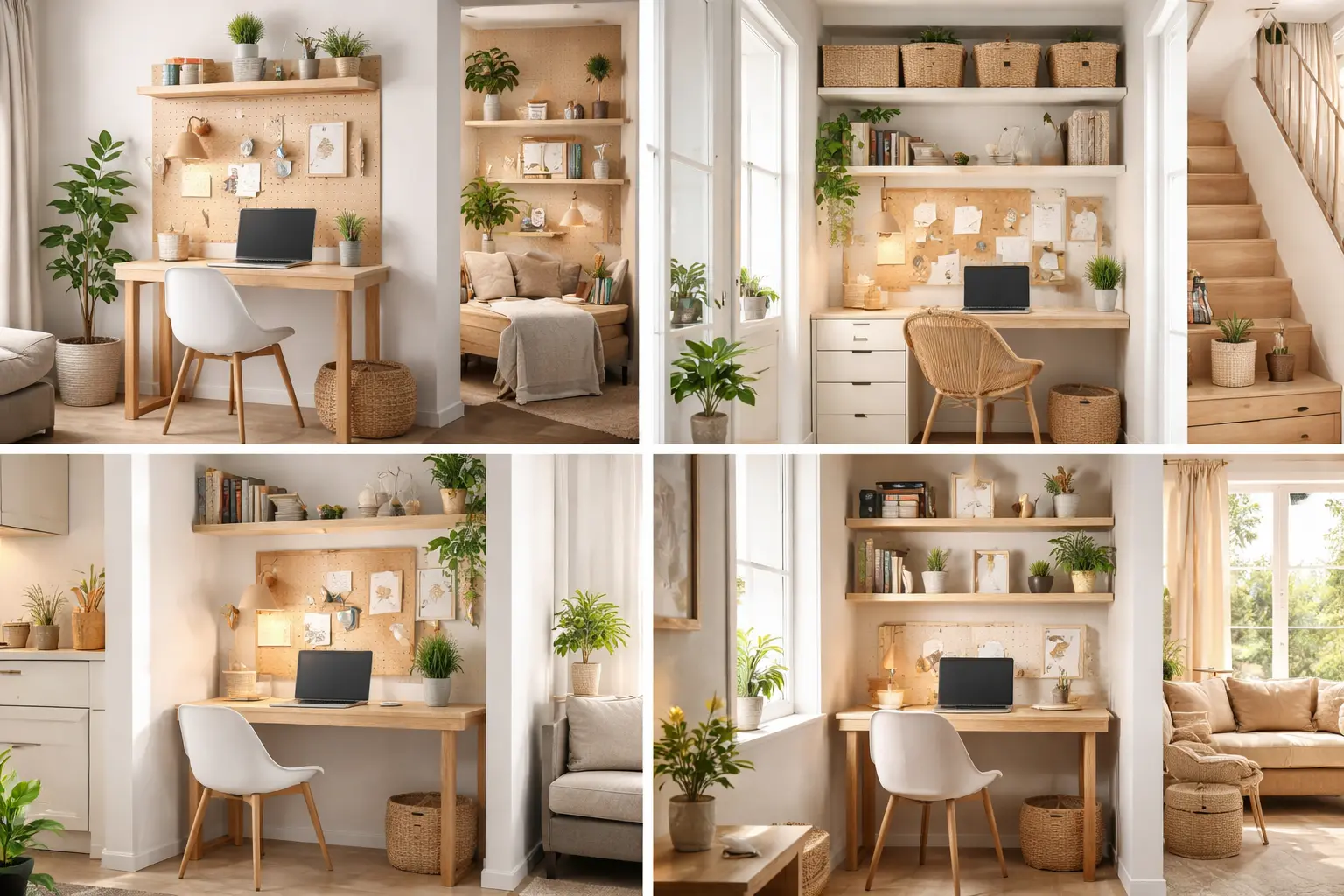
- A living room or bedroom corner: a few square meters are enough for a compact desk and an ergonomic chair
- Under-stair space: often unused, it can house a custom-built desk with integrated shelving
- A wide hallway: a narrow desk (40 cm deep) fixed along the wall creates a discreet and functional workstation
- A niche or alcove: transform it into a closed office space with curtains or sliding doors to visually separate it from the rest of the room
Natural Light: a Top Priority
Position your home office corner to make the most of natural light — ideally to the side of your screen to avoid glare. Natural light reduces eye strain and improves mood, two essential elements for staying focused throughout the day.
To explore the principles of a well-designed workstation, check out our guide on workstation ergonomics.
Choosing the Right Furniture for a Small Home Office Corner
Furniture choice is critical in a limited space. The goal: maximize functionality without cluttering the room.
The Desk: Compact but Functional
For a small home office setup, several desk types stand out:
- Corner desk: it makes use of dead angles and offers a large work surface while remaining discreet in the room
- Wall-mounted fold-down desk: ideal for very small spaces, it folds flat against the wall when not in use
- Compact shallow desk (minimum 60 × 40 cm): sufficient for a laptop and a few essential accessories
Important note: avoid desks that are too deep (over 80 cm) in a small space — they consume floor area without adding extra functionality.
Integrated Storage: Your Best Ally
In a small home office corner, storage must go vertical. Wall-mounted shelves placed directly above the desk keep documents, books, and accessories within reach without cluttering the work surface. A wheeled pedestal unit under the desk doubles your available storage without encroaching on the rest of the room.
Our article on office storage furniture explores in detail the best solutions for efficiently organizing your home workspace.
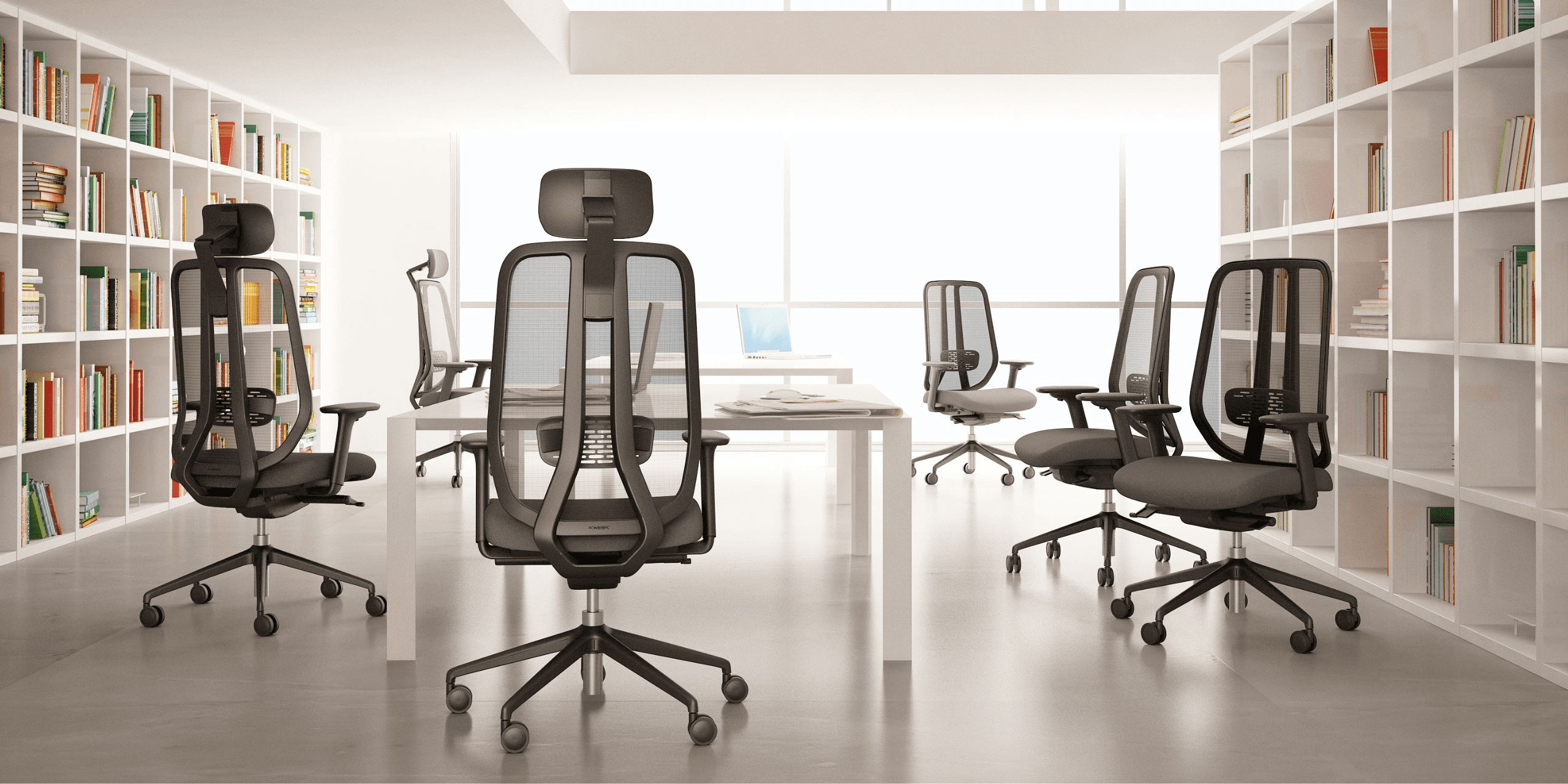
The Ergonomic Chair: the Most Important Investment
This is often the most overlooked element when setting up a home office corner — and yet the most crucial one. You spend long hours sitting at your desk: a poor chair leads to lower back pain and musculoskeletal disorders (MSDs). MSDs account for 87% of recognized occupational diseases in France, and 64% of workers cite ergonomics as their top priority for improving their work environment (UFIPA Barometer, 2025).
A chair suited to an ergonomic home office corner should offer:
- Adjustable lumbar support
- Armrests adjustable in height and width
- A headrest for long work sessions
- Seat depth and height adjustment
At KWESK, our office chairs are designed for intensive daily use with a 5-year warranty. The Gamma and the Challenger are particularly well-suited to daily remote work, combining lasting comfort, advanced ergonomics, and a compact design.
Organizing and Optimizing Your Home Office Corner
A well-organized office corner is one where you work better. Here are the key principles to apply to get the most out of a small space.
Declutter to Work Better
The first reflex: only keep on the desk what you need on a daily basis. A cluttered desk generates stress and hinders concentration. Adopt the "clear work surface" rule: pens, notebooks, and cables in organizers, documents in binders stored on wall shelves above.
Managing Cables Intelligently
Trailing cables are the enemy of a clean and functional small home office corner. A few simple and effective solutions:
- Cable management under the desk: adhesive clips or textile sleeves group cables discreetly along the edge of the table
- Power strip with individual switches: convenient for turning off all devices in one action
- Integrated charging station: a drawer with USB ports eliminates cables piling up on the desk
Visually Delimiting the Space
In a living room or bedroom, it is essential to visually define your home office corner to separate spaces and preserve your mental balance:
- A rug under the desk creates a dedicated and clearly identifiable zone
- An acoustic panel or room divider provides both acoustic and visual separation from the rest of the room
- An accent color on the wall behind the desk (even applied to a small surface) reinforces the identity of the space without weighing down the decor
For comprehensive layout ideas suited to all budgets, our guide on small office space design offers concrete solutions for all types of homes.
Lighting and Atmosphere: the Details that Make the Difference
Adapted Work Lighting
In addition to natural light, equip your home office corner with an adjustable lamp with variable color temperature:
- Cool light (5,000–6,500 K) in the morning: stimulating and ideal for concentration
- Warm light (2,700–3,500 K) at the end of the day: reduces eye strain and promotes relaxation
Avoid placing your screen facing a window or with an intense light source directly behind it — this causes glare and eye fatigue, two often underestimated factors affecting comfort.
Acoustics: Reducing Noise Disruptions
In a small shared space, noise is a major obstacle to concentration. A few effective solutions:
- Wall acoustic panels: easy to install, they absorb reverberation and noticeably improve sound comfort
- Indoor plants: in addition to purifying the air, they slightly absorb ambient sounds
- Noise-canceling headset: essential for calls and intensive work sessions
Plants and Well-Being
Adding one or two plants to your home office corner improves air quality and helps reduce stress. Research from the University of Exeter shows that the presence of plants in a work environment can increase productivity by up to 15%. Choose low-maintenance varieties: pothos, sansevieria, or ZZ plant adapt perfectly to low-light spaces.
Mistakes to Avoid When Setting Up Your Home Office Corner
1. Sacrificing Ergonomics to Save Space
In a small space, the temptation is strong to choose any random chair or prop a laptop on a surface that's too low. This is a costly mistake in the long run: neck and lower back pain can quickly become chronic. Our complete guide on ergonomic office chairs helps you make the right choice based on your needs and budget.
2. Underestimating Storage Needs
A home office corner without sufficient storage quickly becomes unmanageable. Always plan for more storage than you think you need — partially empty shelves are far better than stacks of papers gradually invading your workspace.
3. Ignoring the Work/Private Life Separation
Working in your bedroom without a visual boundary can harm sleep quality and amplify stress. If you have no other option, invest in a room divider or curtains to hide your desk during non-working hours.
4. Forgetting the Sit-Stand Desk Option
In a small home office corner, a sit-stand desk can prove to be a smart choice: it lets you alternate postures throughout the day — a major health benefit — without taking up more floor space than a standard desk.
Layout Ideas Based on Your Space Type
In a Studio Apartment
Opt for a wall-mounted fold-down desk paired with a lightweight stackable chair that can be easily stored. Multifunctional furniture pieces are your best allies in this type of configuration.
In a Living Room
Create a desk alcove in a corner using bookcases as space dividers. An integrated bookcase-desk unit delivers a polished look while limiting the visual footprint in the living area.
In a Bedroom
Install the desk perpendicular to the window, in the least-used corner of the room. A light curtain lets you "close off" the desk in the evening, mentally preserving your relaxation space. For more in-depth guidance, our guide on setting up a home office for remote work covers all possible configurations.
Conclusion
Setting up a functional home office corner in a small space is above all a matter of method: choosing the right location, investing in suitable furniture (especially a proper ergonomic chair), optimizing vertical storage, and getting the lighting right. With these principles applied, even 2 to 3 square meters can become a productive, comfortable, and enjoyable workspace to use every day.
At KWESK, we believe that every workstation — whether in a large professional office or a living room corner — deserves a quality chair. Our ergonomic chairs are designed to last and protect your health over the long term. Explore our full range at kwesk.com, browse our best office chairs, or contact us for personalized advice tailored to your needs.