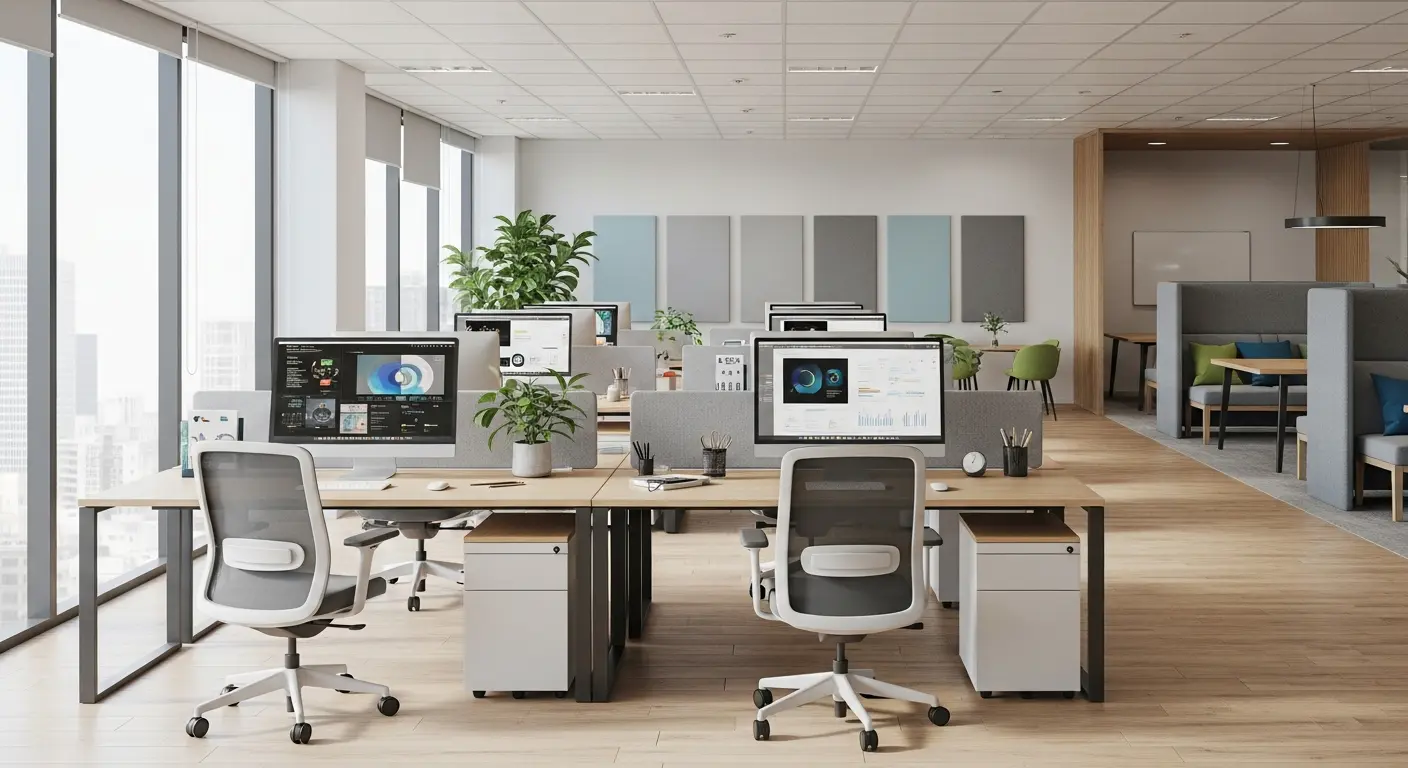
Rethinking your office layout is no longer a simple aesthetic exercise. It is a strategic lever that directly influences your team's performance. According to a Steelcase study, companies that optimize their work environment see an average 17% increase in productivity. Yet many professional spaces remain configured according to outdated patterns, without considering the real needs of employees.
Whether you are planning a complete redesign or targeted adjustments, a good office layout intelligently combines ergonomics, flexibility, and well-being. As an Office Chair Manufacturer, KWESK has been supporting businesses for years in creating high-performing workspaces. In this guide, we share 12 concrete ideas to transform your offices into true engines of productivity and comfort.
Why Office Layout Is a Strategic Priority
Before diving into solutions, it is essential to understand why office layout deserves particular attention. The physical work environment impacts three key dimensions: health, engagement, and performance.
A Deloitte survey reveals that 67% of employees consider the flexibility of their work environment a key factor in productivity. Furthermore, OSHA estimates that implementing ergonomic solutions reduces the risk of musculoskeletal disorders (MSDs) by 60%. These figures show that space optimization is not a luxury but a worthwhile investment.
In 2026, offices are no longer simply places where people sit down to work. They are strategic professional spaces, designed to attract talent, foster collaboration, and support collective well-being.
1. Create Modular Work Zones
The rigidity of traditional layouts hinders adaptability. An intelligent office layout relies on modularity: spaces that transform according to the needs of the moment.
How to Apply This Idea
- Invest in wheeled furniture that is easily movable
- Plan for removable partitions to reconfigure spaces
- Alternate between collaborative and individual configurations depending on projects
Companies that adopt modular spaces see better utilization of every square meter. In 2026, the goal is clear: every space must justify its existence through measurable use.
To go further on choosing the right furniture, check out our guide on professional office furniture.
2. Set Up Quiet Focus Areas
According to the INRS, 60% of employees in open-plan offices complain about noise pollution, and 25% believe it directly affects their productivity. A high-performing office layout must include quiet zones.
Concrete Solutions
- Focus pods: individual acoustic booths for tasks that require sustained attention
- Screen-free zones: spaces dedicated to deep thinking, reading, or writing
- Visual signage: color codes or signs indicating acceptable noise levels per zone
This trend, which experts call "analog escapism," responds to a growing need for disconnection in increasingly stimulating environments.
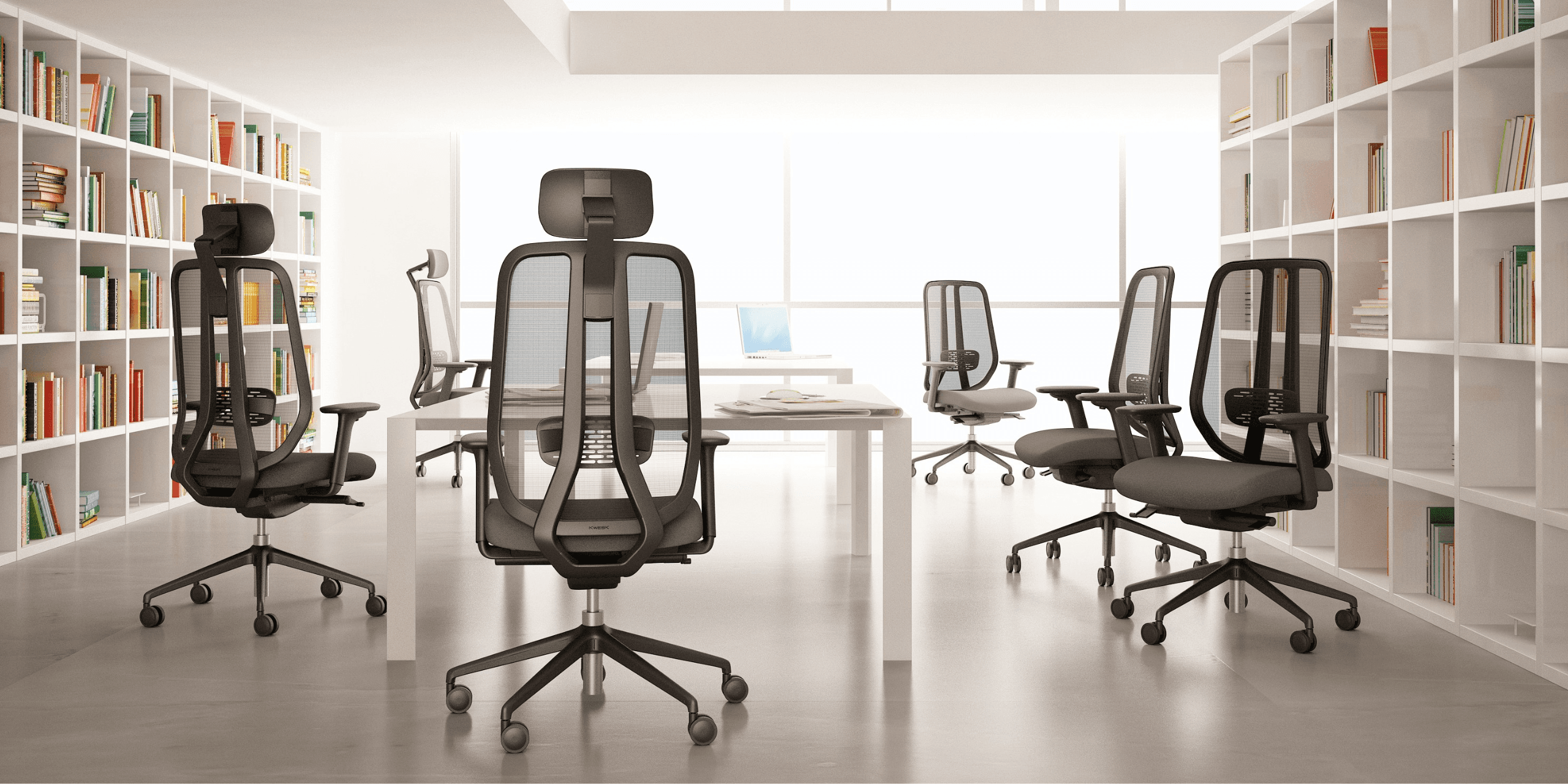
3. Invest in Quality Ergonomic Chairs
The office chair is the item your employees interact with the most, often for 7 to 8 hours a day. A study published in the Journal of Occupational and Environmental Medicine shows that ergonomic interventions increase productivity by 17.5%.
Criteria for a Chair Suited to Intensive Use
- Adjustable lumbar support to prevent back pain
- Seat adjustable in depth and height to adapt to each body type
- Multidirectional armrests to relieve shoulders and wrists
- Breathable materials for extended comfort
A good chair reduces absenteeism related to MSDs, which account for 34% of lost workdays due to occupational injuries (OSHA). Discover our ergonomic office chair comparison to identify the model suited to your needs, or explore the Challenger range, designed for intensive business use.
4. Maximize Natural Lighting
Natural light is one of the most underestimated factors in office layout. It regulates the circadian rhythm, improves mood, and reduces eye strain.
Tips to Optimize Light
- Position workstations perpendicular to windows to avoid glare
- Use glass partitions rather than opaque ones to diffuse light
- Supplement with artificial lighting at variable color temperature (warm in the morning, neutral during the day)
Spaces bathed in natural light are associated with increased satisfaction and lower stress levels among employees. This is a parameter to integrate from the design phase of your space optimization.
5. Incorporate Biophilic Design
Biophilic design involves introducing natural elements into the work environment: plants, raw materials, views of nature, water sounds. Studies show that this approach boosts creativity by 15% and significantly reduces stress.
Simple Ideas to Implement
- Living walls in common areas
- Desk plants at each workstation (pothos, ficus, succulents)
- Natural materials: wood, stone, cork for furniture and finishes
- Indoor fountains to mask ambient noise
An office layout that integrates nature creates a more soothing and stimulating environment—two qualities that do not oppose each other but complement one another.
6. Design Well-Thought-Out Collaborative Spaces
Collaboration is not decreed; it is facilitated by space. An effective office layout includes zones dedicated to exchanges, distinct from individual work areas.
Formats That Work
- Informal corners with sofas and coffee tables for spontaneous brainstorming
- Meeting rooms of varying sizes (2, 4, 8 people) to avoid oversized rooms
- Hybrid spaces equipped for video conferencing, essential with 28% of workers in hybrid arrangements
The acoustics of these spaces are paramount. Poor sound conditions remain the top complaint of employees in professional settings. Consider integrating sound-absorbing panels and executive chairs suited for meeting rooms.
7. Optimize Storage and Reduce Clutter
A cluttered space generates stress and impairs concentration. Space optimization also involves an intelligent storage system that keeps desks organized.
Effective Storage Strategies
- Wall-mounted cabinets to free up floor space
- Mobile pedestals under desks for personal belongings
- Clean desk policy: each employee tidies their workstation at the end of the day
- Centralized storage areas for shared supplies
Check out our dedicated article on office storage furniture for solutions adapted to every configuration.
8. Master Workspace Acoustics
Acoustics has become one of the most decisive criteria in office layout in 2026. With the proliferation of video conferences and hybrid work, noise is a silent enemy of productivity.
High-Performance Acoustic Solutions
- Absorbent ceiling tiles to reduce reverberation
- Carpets and rugs in high-traffic areas
- Acoustic partitions between collaborative and individual spaces
- Acoustic furniture: high-back chairs, soundproofed alcoves
An office layout with controlled acoustics allows teams to focus without being disturbed, while facilitating exchanges when needed.
9. Offer Sit-Stand Workstations
Height-adjustable desks allow employees to alternate between sitting and standing positions throughout the day. A 7-week study demonstrated that employees using sit-stand desks experience less stress and fatigue, while reporting more energy and vitality.
Practical Implementation
- Start by equipping 30% of workstations to test adoption
- Train teams on best practices (alternate every 30 to 45 minutes)
- Pair these desks with adapted ergonomic chairs for optimal comfort in the seated position
The goal is not to eliminate sitting but to offer choice. This flexibility is at the heart of an office layout centered on well-being.
10. Create Relaxation and Decompression Spaces
Research shows that environments incorporating ergonomics reduce stress-related symptoms by 48%. Relaxation spaces play a central role in this equation.
What a Good Break Area Contains
- Equipped kitchen corner with comfortable furniture
- Rest zone with relaxing armchairs and soft lighting
- Games or fitness area (ping-pong table, stationary bike)
- Terrace or garden if the layout permits
These spaces are not a "bonus" in 2026: they are a key factor in talent retention. An office layout that neglects decompression misses a powerful lever for engagement.
11. Integrate Technology Seamlessly
Smart technologies applied to offices can reduce real estate costs by up to 35% through analysis of actual space usage.
Concrete Applications
- Occupancy sensors to identify underused zones
- Booking systems for rooms and workstations
- Automated lighting and climate control based on occupancy
- Interactive screens in meeting rooms to streamline collaboration
Technology in service of office layout does not replace sound architectural judgment, but it enables continuous optimization of space usage. For computer workstations, our guide on the ideal computer desk will help you make the right choices.
12. Personalize Workstations
Personalization is a driver of ownership and engagement. Allowing each employee to adapt their workstation to their preferences strengthens their sense of belonging.
How to Encourage Personalization
- Guided decorative freedom: photos, plants, personal items within a defined framework
- Individual adjustments: screen height, keyboard position, chair tilt
- Furniture choice from a preselected range (for example, the Exclusive or Challenger range from KWESK)
A personalized office layout shows employees that their comfort matters. It is a strong signal that translates into increased engagement.
Summary Table: Impact of Each Idea
| Idea | Primary Impact | Priority |
|---|---|---|
| Modular zones | Flexibility, optimal utilization | High |
| Quiet spaces | Focus, productivity | High |
| Ergonomic chairs | Health, MSD reduction | High |
| Natural lighting | Well-being, energy | Medium |
| Biophilic design | Creativity, stress reduction | Medium |
| Collaborative spaces | Communication, innovation | High |
| Smart storage | Organization, serenity | Medium |
| Controlled acoustics | Focus, comfort | High |
| Sit-stand workstations | Vitality, flexibility | Medium |
| Relaxation spaces | Talent retention, well-being | Medium |
| Integrated technology | Space optimization, costs | Low |
| Personalization | Engagement, belonging | Low |
How to Prioritize Your Office Layout Project
Transforming all your spaces at once is not always realistic. Here is a step-by-step approach:
- Audit the existing setup: identify the major pain points (noise, lack of light, unsuitable chairs)
- Quick wins: start with high-impact, low-cost changes (reorganizing furniture, adding plants, improving lighting)
- Structural investments: plan heavier transformations (acoustics, ergonomic furniture, technology)
- Continuous measurement: evaluate the impact of each change on satisfaction and productivity
According to ADEME, 73% of French companies now integrate environmental criteria into their furniture procurement. This is a parameter to consider in your choices for a sustainable and responsible office layout.
Conclusion
Office layout is much more than a matter of decoration. It is a strategic investment that affects the health, motivation, and performance of every employee. The 12 ideas presented in this guide offer a concrete framework for transforming your spaces, whether through quick adjustments or complete redesigns.
Start with the fundamentals: ergonomic chairs suited for intensive use, controlled acoustics, and flexible work zones. These three pillars form the foundation of a successful office layout.
At KWESK, we design professional office chairs built to support your workplace design projects. With a 5-year warranty and materials engineered for intensive use, our ranges integrate naturally into any space optimization project.
Ready to rethink your office layout? Contact our team for personalized support, or explore our professional furniture solutions for inspiration.