En France, plus de 3,2 millions de salariés travaillent en open space, soit 40 % des employés de bureau. Pourtant, 60 % d'entre eux se plaignent des nuisances sonores et 34 % déclarent des douleurs physiques fréquentes (INRS). L'open space aménagement ne peut plus se résumer à aligner des bureaux dans un grand plateau. En 2026, concevoir un espace de travail ouvert exige une approche qui concilie collaboration, concentration et bien-être. Ce guide vous livre les tendances clés et les bonnes pratiques pour transformer votre bureau open space en un environnement réellement performant.
Pourquoi Repenser Votre Aménagement Open Space en 2026
Le modèle classique de l'open space — rangées de postes identiques sans cloisons — montre ses limites. Selon une étude publiée par Business.com, les distractions sonores font perdre en moyenne 86 minutes par jour à chaque collaborateur. Le résultat : une baisse de productivité estimée entre 15 % et 28 %.
Les attentes des salariés ont également évolué. Avec la généralisation du travail hybride — plus de 28 % des actifs alternent désormais entre domicile et bureau — l'espace de travail physique doit offrir une vraie valeur ajoutée pour justifier le déplacement.
Les Limites de l'Open Space Traditionnel
Les chiffres parlent d'eux-mêmes :
- 63 % des employés estiment manquer d'espaces calmes pour se concentrer
- Les salariés en open space sont 62 % plus susceptibles de prendre des congés maladie que ceux en bureau individuel
- Le bruit ambiant augmente la fatigue nerveuse de plus de 30 % chez les profils nécessitant une concentration intense
- 49 % des travailleurs peinent à se concentrer dans un environnement ouvert et bruyant
Ces constats ne signifient pas qu'il faut abandonner l'open space. Ils invitent à le réinventer avec une approche plus intelligente et plus humaine.
Les 5 Tendances Majeures de l'Open Space en 2026
1. Les Activity Neighborhoods : la Fin du Plateau Uniforme
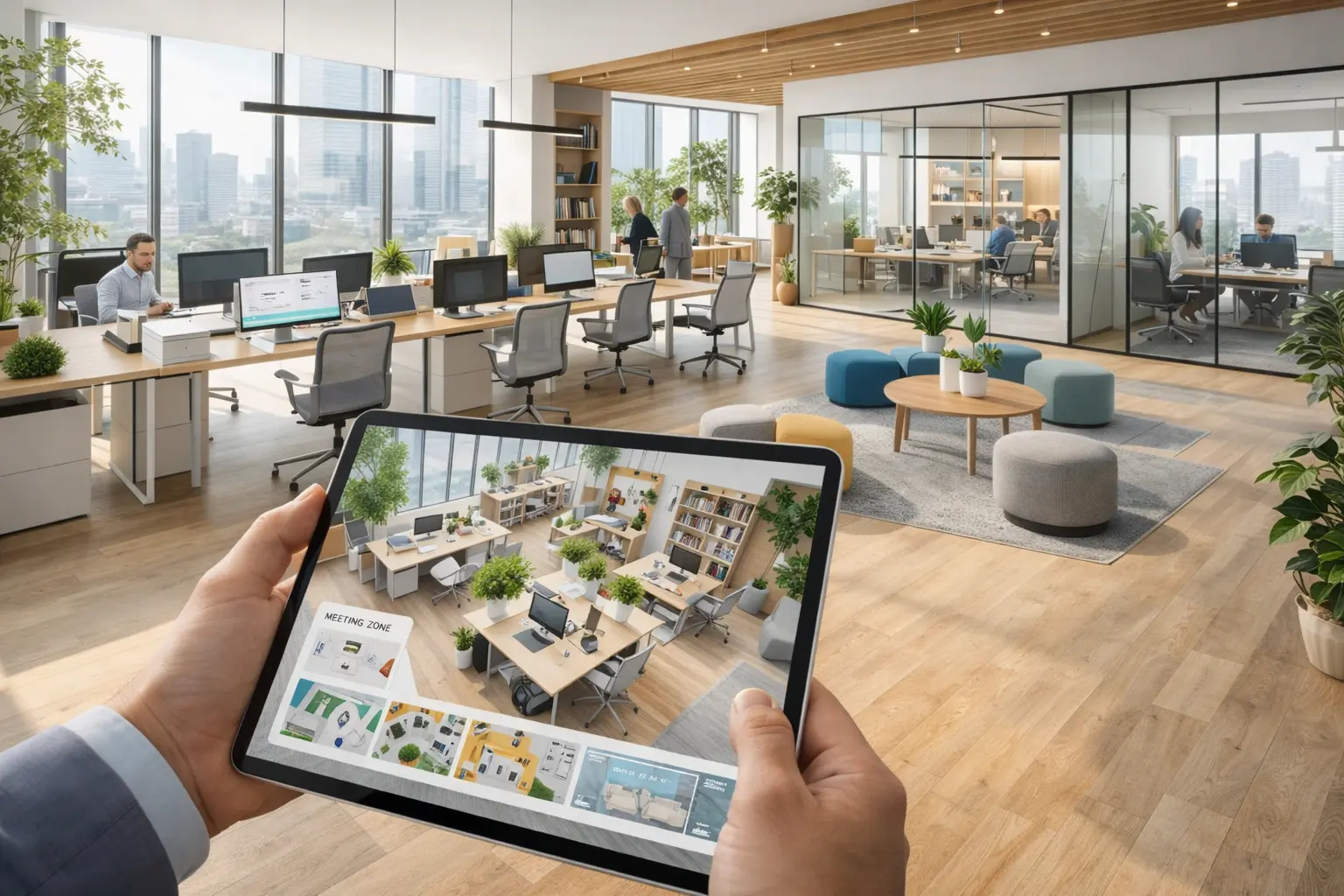
L'amenagement open space en 2026 s'organise désormais en « quartiers d'activité » (activity neighborhoods). Chaque zone est conçue pour un mode de travail spécifique :
- Zone de concentration : espaces silencieux avec du mobilier ergonomique, éclairage adapté et isolation acoustique
- Zone collaborative : tables modulables, écrans partagés et sièges confortables pour les sessions de brainstorming
- Zone sociale : espaces détente avec canapés, cuisine ouverte et ambiance conviviale
- Zone de présentation : salles équipées pour les réunions formelles et les town halls
Cette segmentation intelligente permet à chaque collaborateur de choisir l'environnement le plus adapté à sa tâche du moment.
2. L'Acoustique au Cœur de la Conception
En 2026, l'acoustique est reconnue comme un facteur clé de performance, au même titre que l'ergonomie ou l'éclairage. Les solutions se diversifient :
- Panneaux muraux acoustiques décoratifs qui absorbent le bruit tout en habillant l'espace
- Cloisons semi-ouvertes entre les zones de travail
- Plafonniers acoustiques suspendus au-dessus des postes de travail
- Banquettes enveloppantes créant des micro-bulles de calme
- Cabines acoustiques individuelles (phone booths) pour les appels et la concentration profonde
Un collaborateur exposé à une seule conversation à proximité peut voir sa productivité chuter de 66 %. Investir dans l'acoustique n'est donc pas un luxe — c'est une nécessité économique.
3. Le Flex Office : la Flexibilité Comme Standard
Le flex office s'impose comme le modèle dominant d'organisation des espaces. Le principe : aucun poste n'est attribué de manière fixe. Les collaborateurs choisissent leur espace en fonction de leurs besoins du jour.
Pourquoi ça fonctionne :
- En moyenne, un poste de travail reste vacant 40 % du temps (congés, télétravail, déplacements)
- Le ratio optimal se situe entre 0,6 et 0,8 poste par collaborateur, garantissant un roulement fluide
- Le cabinet Asterès estime le gain de productivité lié aux espaces flexibles à 11 000 € par employé et par an
- 59 % des entreprises prévoient d'investir davantage dans l'aménagement de leurs espaces en 2026
Le flex office nécessite toutefois un mobilier de bureau professionnel adapté — notamment des sièges ergonomiques capables de s'ajuster rapidement à différents utilisateurs.
4. Les Espaces Low-Tech et Zones de Déconnexion
Tendance forte de 2026 : le bureau intègre désormais des zones volontairement déconnectées. Ces espaces sans écrans, sans notifications et sans sollicitations constantes permettent de :
- Retrouver une capacité de concentration profonde
- Réduire la fatigue cognitive liée à la surcharge informationnelle
- Favoriser la créativité par le calme et la réflexion
- Offrir de véritables pauses mentales aux collaborateurs
Des wellness rooms dédiées à la méditation, aux micro-siestes ou aux pauses courtes complètent ce dispositif.
5. La Durabilité et la Traçabilité du Mobilier
En 2026, l'espace collaboratif se veut responsable. Les entreprises recherchent du mobilier :
- Durable et réparable plutôt que jetable
- Fabriqué localement pour réduire l'empreinte carbone
- Non toxique et respectueux de la santé des occupants
- Traçable dans sa chaîne de fabrication
Cette exigence s'aligne avec la démarche de fabricants engagés qui misent sur des matériaux innovants et une production durable, avec des garanties longue durée.
Best Practices pour Réussir Votre Aménagement Open Space
Respecter les Normes d'Espace et d'Ergonomie
Un open space aménagement réussi commence par les fondamentaux :
- Minimum 10 m² par poste de travail pour garantir le confort et la circulation
- Éclairage naturel maximal : privilégiez les postes à moins de 6 mètres des fenêtres
- Température maintenue entre 21 °C et 23 °C pour un confort optimal
- Mobilier ergonomique réglable adapté à l'usage intensif et aux différentes morphologies
Les troubles musculosquelettiques (TMS) représentent 87 % des maladies professionnelles en France, avec un coût moyen de 4 500 € par salarié et par an. Investir dans des sièges ergonomiques de qualité réduit le risque de TMS de 25 % selon l'INRS.
Créer un Zonage Clair et Intuitif
Pour que votre bureau open space fonctionne, les collaborateurs doivent identifier instantanément la vocation de chaque zone :
- Signalétique visuelle : couleurs, revêtements de sol et éclairage différenciés par zone
- Mobilier distinctif : fauteuils de direction dans les espaces de concentration, assises collaboratives dans les zones d'échange
- Règles d'usage affichées : niveaux sonores autorisés, durée d'occupation des phone booths, politique de rangement
- Transitions progressives : évitez les ruptures brutales entre zone bruyante et zone silencieuse grâce à des espaces tampons
Choisir le Bon Mobilier pour Chaque Zone
Chaque espace de votre open space nécessite un mobilier spécifique :
Zone de travail individuel :
- Bureaux réglables en hauteur (assis-debout)
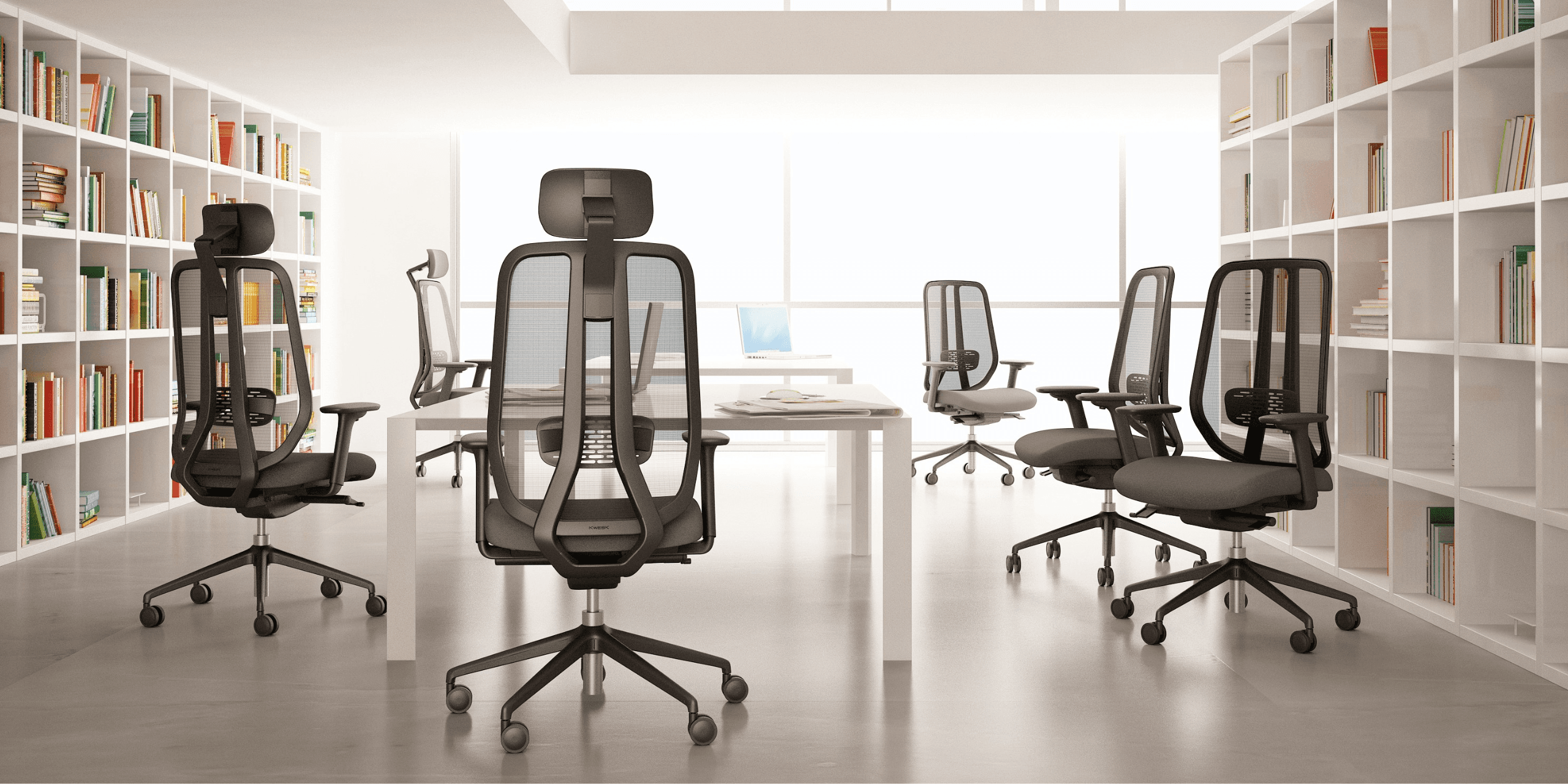
- Fauteuils ergonomiques avec soutien lombaire, accoudoirs réglables et appui-tête
- Écrans de séparation légers et acoustiques
Zone collaborative :
- Tables modulables sur roulettes
- Sièges polyvalents et empilables
- Tableaux blancs mobiles et écrans interactifs
Zone de concentration :
- Fauteuils haut de gamme enveloppants pour un confort maximal
- Bureaux individuels avec parois acoustiques
- Éclairage personnel ajustable
Zone détente :
- Mobilier souple : poufs, canapés, fauteuils lounge
- Tables basses et comptoirs pour les pauses café
- Rangements intégrés pour un espace toujours ordonné
Intégrer la Technologie au Service du Confort
Un espace collaboratif moderne en 2026 intègre la technologie de façon transparente :
- Systèmes de réservation de postes et de salles via application mobile
- Capteurs d'occupation pour analyser l'utilisation réelle des espaces et ajuster l'aménagement
- Wi-Fi haute performance partout, avec bornes de recharge intégrées au mobilier
- Éclairage connecté qui s'adapte automatiquement à la luminosité extérieure
Impliquer les Collaborateurs dans le Projet
L'une des erreurs les plus fréquentes est de concevoir l'amenagement open space sans consulter les futurs utilisateurs. Pour garantir l'adhésion :
- Réalisez un sondage interne sur les habitudes de travail et les attentes
- Organisez des ateliers de co-conception avec des représentants de chaque service
- Mettez en place un pilote sur une zone test avant de déployer à l'ensemble du plateau
- Recueillez les retours d'expérience après 3 et 6 mois pour ajuster l'aménagement
Les Erreurs à Éviter Lors de l'Aménagement
Même avec les meilleures intentions, certaines erreurs récurrentes compromettent la réussite du projet :
- Négliger l'acoustique : c'est la première source d'insatisfaction en open space. Prévoyez un budget dédié dès la conception.
- Sous-dimensionner les espaces de concentration : si 63 % des employés manquent d'espaces calmes, c'est souvent parce que le ratio zones collaboratives / zones de focus est déséquilibré.
- Économiser sur l'assise : un fauteuil de bureau inadapté coûte bien plus cher à long terme en arrêts maladie et en baisse de productivité. Les salariés en environnement ergonomique sont 17 % plus productifs et déclarent une satisfaction au travail 33 % plus élevée.
- Oublier le rangement : le flex office sans solution de rangement personnel (casiers, caissons mobiles) génère frustration et désordre.
- Ignorer la ventilation et la qualité de l'air : les open spaces mal ventilés augmentent significativement l'absentéisme.
Quel Budget Prévoir pour un Open Space Aménagement Réussi
Le budget varie considérablement selon l'ambition du projet, mais voici les fourchettes courantes en 2026 :
| Poste de dépense | Budget par poste de travail |
|---|---|
| Mobilier ergonomique (bureau + siège) | 800 € – 2 500 € |
| Solutions acoustiques | 200 € – 600 € |
| Éclairage et connectique | 150 € – 400 € |
| Aménagement des zones communes | 300 € – 800 € |
| Technologies (capteurs, réservation) | 100 € – 300 € |
Rappel : un poste de travail reste vacant 40 % du temps en moyenne. Le passage au flex office avec un ratio de 0,7 poste par collaborateur permet de réduire les coûts immobiliers de 30 à 40 %, finançant largement l'investissement dans un aménagement de qualité supérieure.
Conclusion
L'open space aménagement en 2026 n'a plus rien à voir avec les plateaux uniformes et bruyants des décennies précédentes. Entre activity neighborhoods, solutions acoustiques avancées, flex office et mobilier durable, les entreprises disposent aujourd'hui de tous les leviers pour créer des espaces de travail qui stimulent la performance tout en préservant la santé des collaborateurs.
La clé du succès réside dans l'équilibre : collaboration et concentration, technologie et déconnexion, flexibilité et confort. Et au cœur de cet équilibre, le choix du mobilier — notamment des sièges ergonomiques — joue un rôle déterminant.
Vous envisagez de repenser votre espace de travail ? Découvrez les gammes de sièges ergonomiques KWESK conçues pour l'usage intensif en open space, avec des matériaux durables et une garantie de 5 ans. Contactez nos experts pour un accompagnement personnalisé dans votre projet d'aménagement.