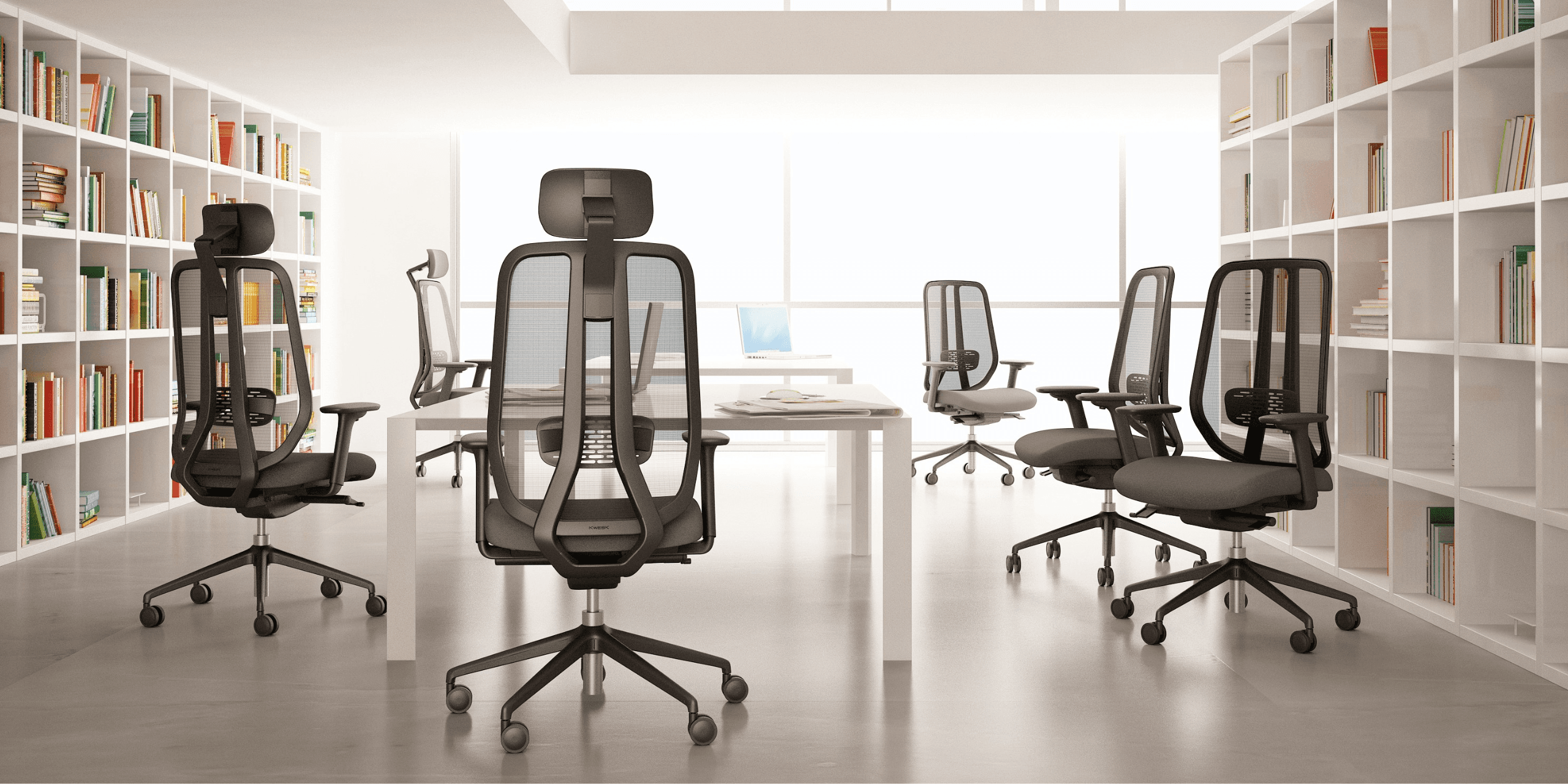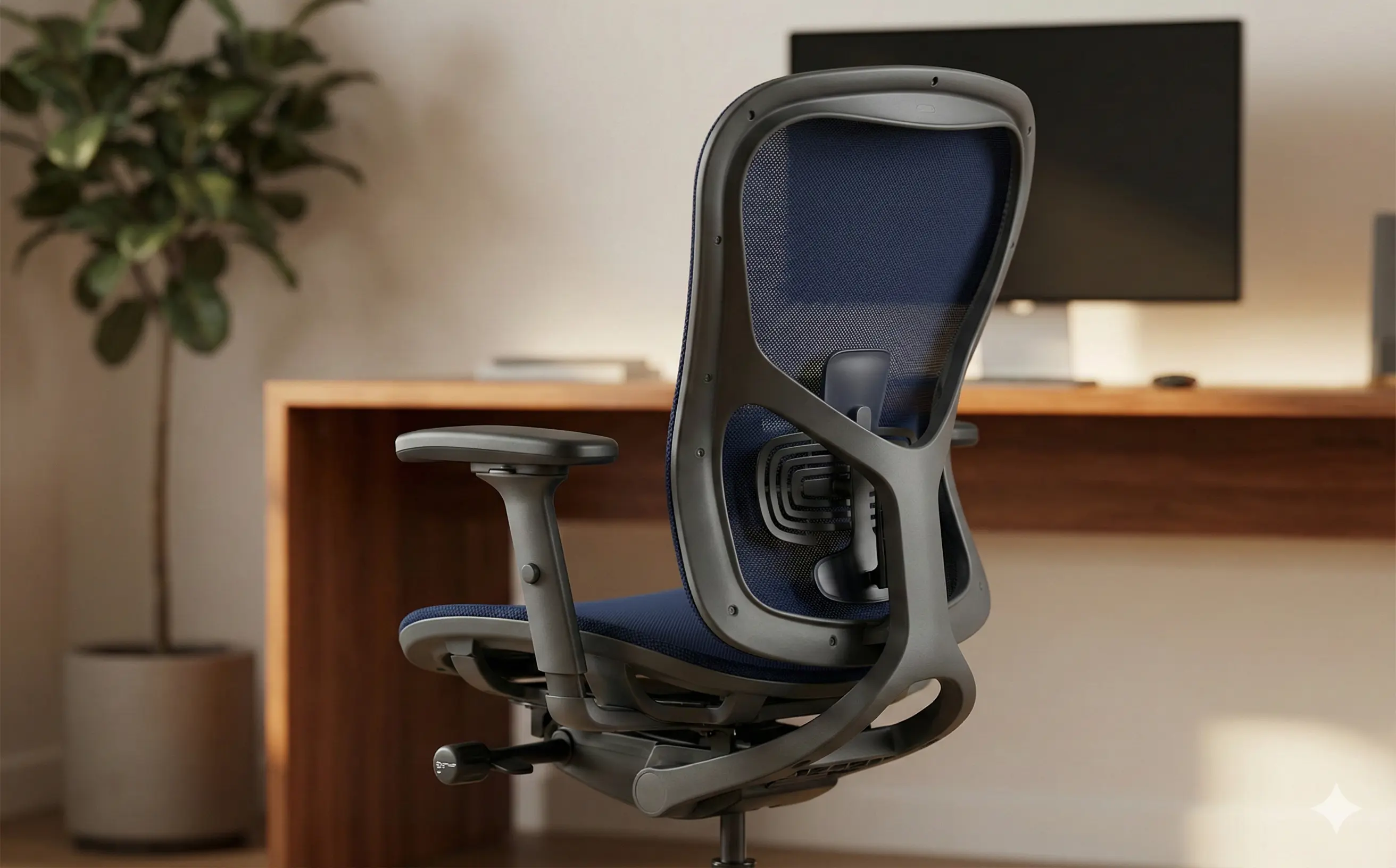
"My back hurts." This phrase echoes through French offices day after day. If you're among the millions of workers experiencing pain related to poor posture, you're not alone. The good news? A solution exists and it can transform your professional daily life: the ergonomic office chair.
Much more than just a piece of furniture, a quality office chair is your best ally for preserving your health, reducing absenteeism, and boosting your productivity. Discover in this comprehensive guide how to choose the perfect office chair for your needs.
The Alarming Numbers: The MSD Epidemic in France
The statistics don't lie. In France, Musculoskeletal Disorders (MSDs) constitute the leading cause of recognized occupational illness. According to a study by Santé Publique France, nearly 88% of occupational illnesses are related to MSDs, with the back being the most affected area, impacting one in two French people.
The cost of this silent epidemic is staggering: absenteeism related to MSDs exceeds 7 billion euros per year in France. This investment you're considering in an ergonomic office chair is therefore not just a matter of personal comfort – it's an economically sound decision for your company and your long-term health.
Why the Ergonomic Chair is Essential
Unlike a classic office chair, a true quality ergonomic chair is designed according to a fundamental principle: adapting to your body, not the other way around. This difference is crucial and generates measurable benefits.
The Advantages of an Ergonomic Office Chair
Prevention of MSDs and Chronic Pain A well-designed office chair offers adequate support that reduces pressure on the spine, lower back, and cervical vertebrae. This active prevention significantly reduces the risk of developing occupational pathologies.
Improved Blood Circulation Good posture releases compression points and promotes optimal blood circulation. No more heavy legs and numbness at the end of the day.
Reduced Muscle Fatigue Less muscle tension means more energy and better concentration throughout the day. Your hourly productivity naturally increases.
Professional Productivity Boost Studies have proven it: an employee well-seated on a quality ergonomic chair is a more engaged, more focused, and more efficient employee.
Case Study: Sophie's Testimony, Freelance Developer
Sophie, 32 years old, works as a freelance web developer. For several months, she worked more than 10 hours a day on a simple kitchen chair. Inevitably, unbearable pain in her lower back and cervical area appeared, forcing her to take days off she couldn't afford.
On the wise advice of her physiotherapist, Sophie decided to invest in a professional-quality ergonomic chair, equipped with adjustable lumbar support and 3D adjustable armrests.
Her assessment after a few weeks? "It's like night and day," she confides. "My pain almost completely disappeared in a few weeks. I feel much more focused, efficient, and I no longer dread the end of the day. It's an investment I highly recommend to all independent workers."
This story is nothing exceptional. It simply illustrates the transformative power of a suitable office chair.
The Ultimate Guide to Choosing Your Office Chair
Ready to invest in your comfort and health? Here are the essential criteria to examine when selecting the office chair that will become your work companion for years to come.
1. Adjustments: The Heart of Customization
An excellent ergonomic chair must offer a wealth of adjustments allowing complete customization. Look for the following options:
Seat Height Your feet should rest flat on the floor, with knees forming an angle of approximately 90°. This position is fundamental for correct posture. Verify that the office chair offers a sufficient adjustment range for your body type.
Seat Depth A space of 2 to 3 fingers should remain between the front edge of the seat and the back of your knees. This correct depth avoids compression points and promotes optimal blood circulation in the legs.
Lumbar Support (Crucial Point) This is the differentiating element between a good office chair and an excellent one. Lumbar support must be adjustable in height AND depth to perfectly match the natural curve of your back. Don't compromise on this criterion.
Backrest Tilt with Synchro Mechanism The synchro mechanism is the ideal solution. It coordinates the tilt of the backrest and seat in harmony, maintaining optimal support regardless of the angle you recline. It's a must-have for high-end office chairs.
3D or 4D Armrests Armrests should be adjustable in height, width, and depth (4D also including angle). They directly relieve shoulders, neck, and arms, thus reducing tension and cervical pain.
Optional but Recommended Headrest If you suffer from cervical issues or like to work in a semi-reclined position, an adjustable headrest is essential. It transforms your office chair into a true premium workstation.
2. Materials: The Winning Trio for Comfort
Classic Fabric Breathable, soft, and comfortable, fabric is an excellent choice for intense daily use. It will offer satisfactory longevity and a good quality-price compromise.
Mesh Ideal for maximum aeration, mesh prevents sweat accumulation and dynamically adapts to the shape of your back. Users with thermoregulation issues largely prefer it.
Genuine Leather Elegant, durable, and providing an undeniable professional touch, genuine leather ages well. Caution however: entry-level leather will age poorly and crack quickly. Invest in real quality leather.
3. Certifications: Your Guarantee of Quality
Don't leave the certainty of your choice to chance. The NF EN 1335 standard is the absolute reference in Europe. It guarantees that the office chair meets strict requirements for dimensions, structural safety, and durability over time.
Look for this certification when making your purchase. It's often indicated on product sheets from serious manufacturers.
4. Your Body Type: A Criterion Often Forgotten
An office chair is exactly like clothing: it must be your size. There are models specifically designed for different body types.
Check:
- The maximum weight supported (often indicated in specifications)
- The minimum and maximum seat height compatible with your height
- The seat width adapted to your body type
- Special options for very tall people, very short people, or particular body types
Don't force it: a wrong ergonomic chair for your body type cancels all its potential benefits.
Quick Comparison: Office Chair vs Classic Chair
| Criterion | Classic Chair | Ergonomic Chair |
|---|---|---|
| Lumbar Support | Minimal | Adjustable and adapted |
| Armrests | Fixed or absent | Adjustable 3D/4D |
| Adjustments | Very limited | Very comprehensive |
| Long-term Comfort | Low | Excellent |
| MSD Prevention | None | Very effective |
| Price | Low | Medium to high |
| Durability | 2-3 years | 7-10 years |
| ROI (return on investment) | Low | Very high |
Invest Today in Your Health Capital
Choosing an office chair is not a trivial act or a superfluous expense. It's a long-term strategic investment for your physical health, mental well-being, and professional efficiency.
The data is clear: 88% of occupational illnesses in France are MSDs. The costs are staggering: 7 billion euros annually. But solutions exist and they work, as proven by Sophie's testimony and that of millions of satisfied workers.
Take the time to compare models, try them if possible, and choose the ergonomic chair that will perfectly match your body type and specific needs. Your back, your cervical vertebrae, and your productivity will thank you for the next 7 to 10 years.
A good office chair is not a cost, it's an investment. And it's one of the best you can make for yourself.